“I tried to discover, in the rumor of forests and waves, words that other men could not hear, and I pricked up my ears to listen to the revelation of their harmony.”
- Gustave Flaubert, November
“Versöhnung” is an 8×8 mixed media canvas where night water turns into a slow argument with itself. The waves blur into one another in shades of silver and violet, never fully separating, never fully merging, caught in the moment before a conclusion forms. The surface feels restless, as if the ocean is thinking through something and has not yet decided what it wants to say.
Across this unsettled field sits a network of gold lines, a measured framework that neither restrains the water nor ignores it. It behaves like a dialectical partner. Each vertical and horizontal path meets at a point of tension, a place where two forces notice each other and wait for a response. The circles placed along these intersections recall the circle of fifths, a quiet nod to musical harmony, but here they behave like stages in a philosophical process. They hint at conflict, negation, recognition, and the eventual movement toward something more whole.
Georg Wilhelm Friedrich Hegel believed that conflict is not a failure of understanding, but the beginning of it. This piece leans into that idea. The waves and the gold grid don’t resolve their differences through domination. They press against each other until a more expansive form of balance emerges. The water keeps its motion. The geometry keeps its clarity. Together they create a space where contradiction becomes productive and the discord between intuition and structure starts to sound like a chord rather than a break.
The embroidered circles act like small reconciliations, places where the two worlds meet without losing their identity. They suggest that harmony is not the absence of tension but the recognition of it. “Versöhnung” holds that moment when opposing forces begin to see themselves reflected in the other. The ocean stops fighting the grid. The grid stops insisting on control. The viewer is left with a quiet sense that progress is possible, not because the conflict disappears, but because it has been acknowledged and transformed.
The canvas offers a vision of reconciliation that feels earned. Nothing collapses into simplicity. Instead, the work reminds you that resolution arrives through movement, friction, and an eventual understanding that both sides belong to the same larger order.
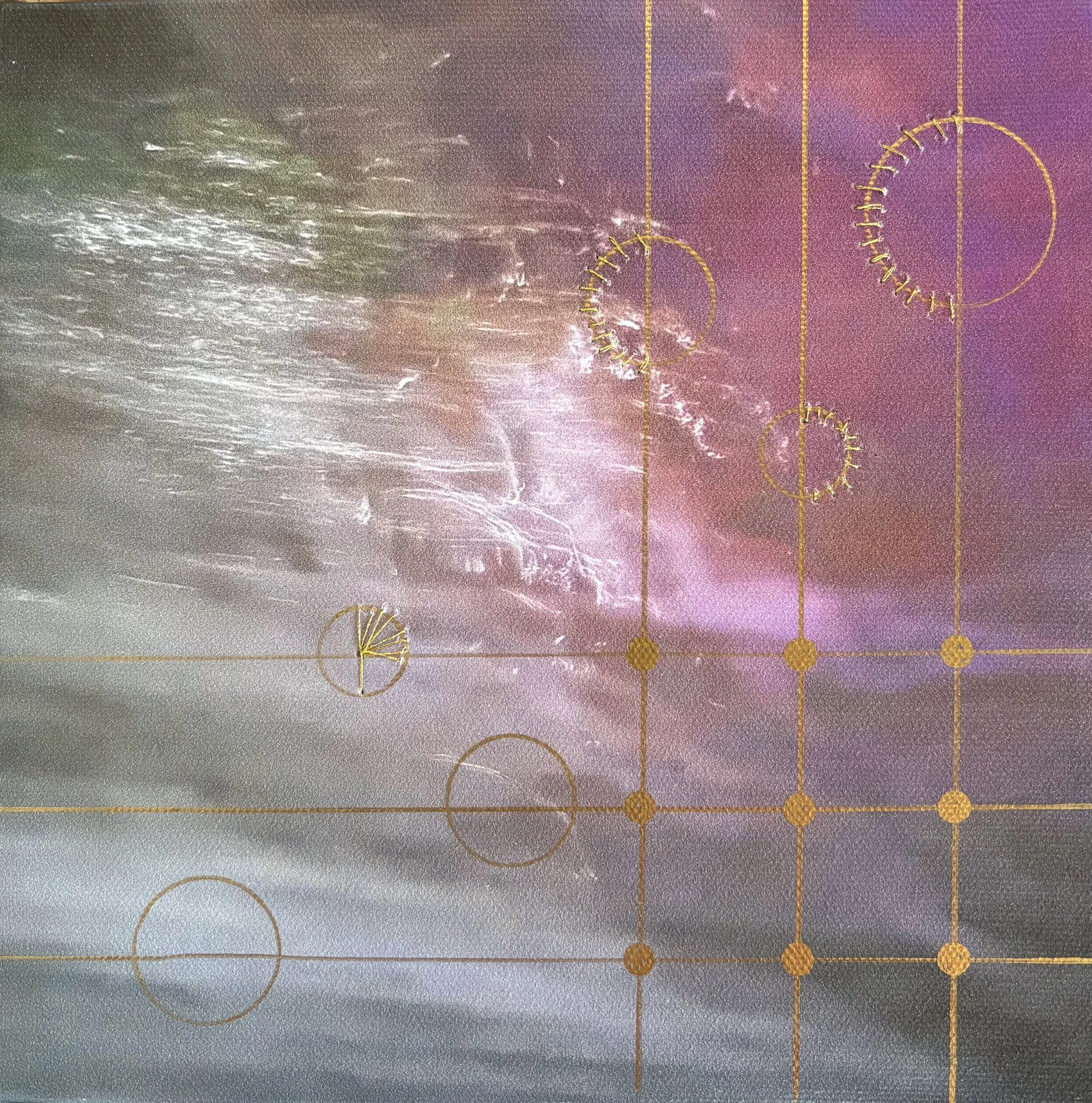 Image 1 of 6
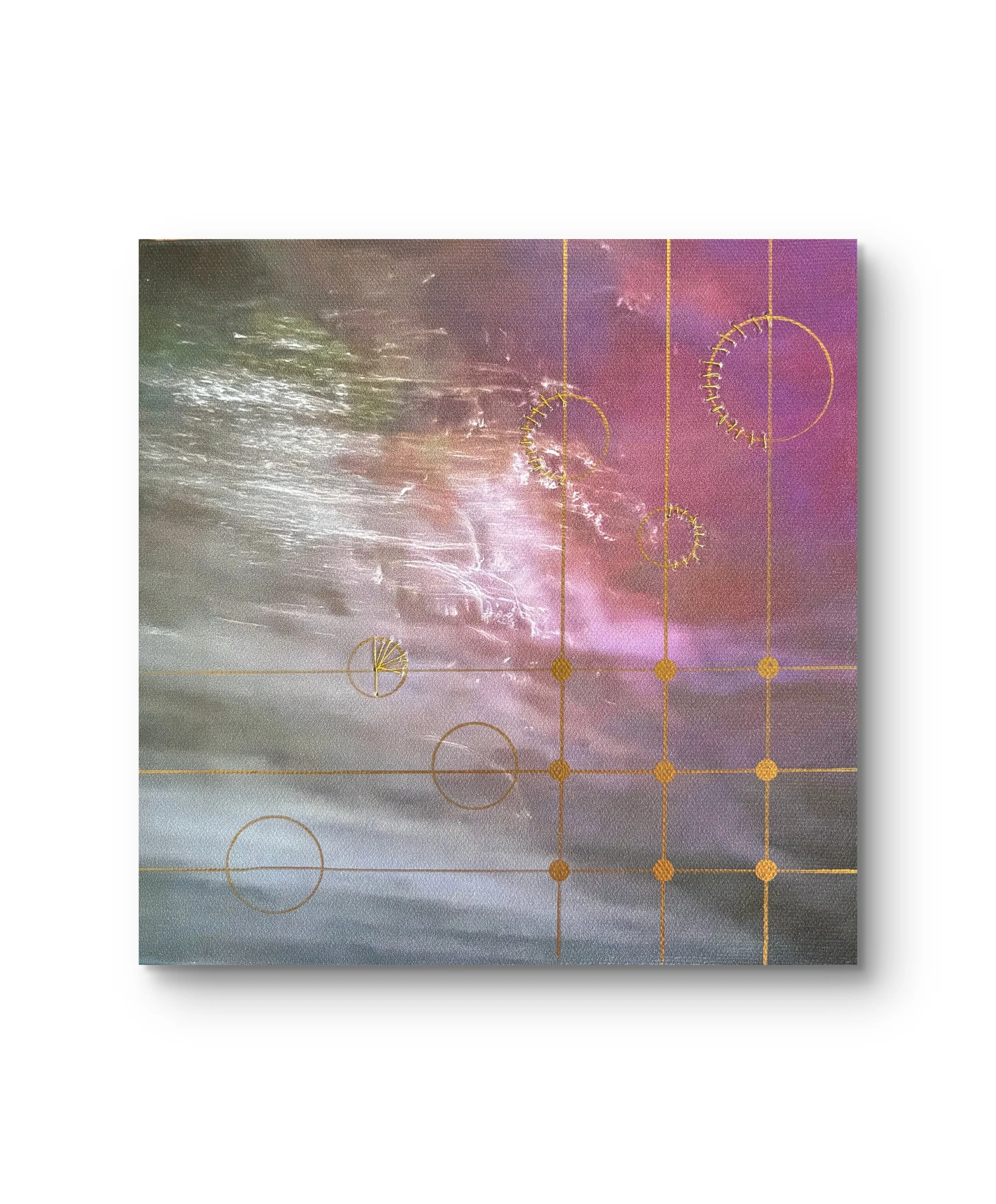 Image 2 of 6
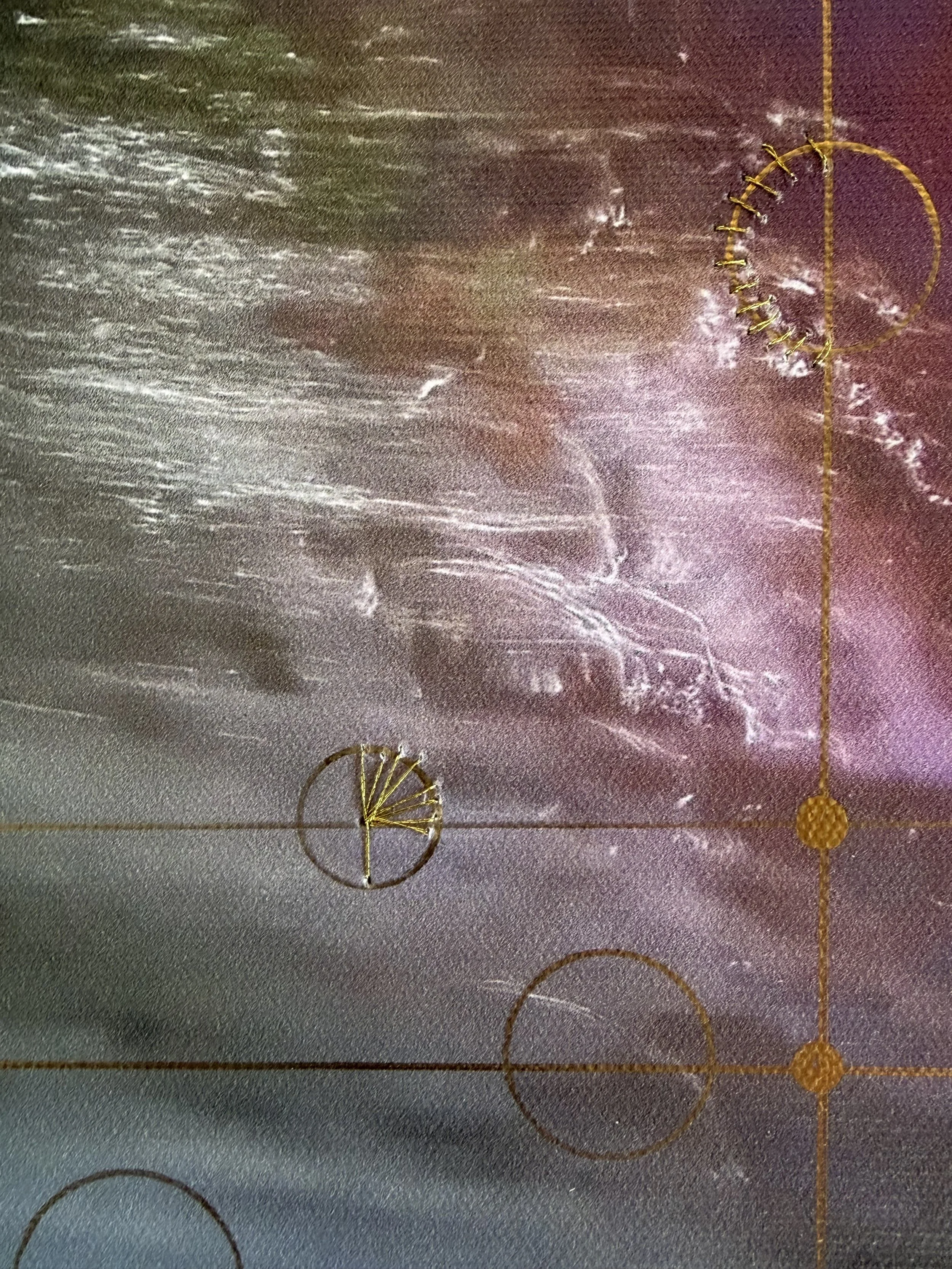 Image 3 of 6
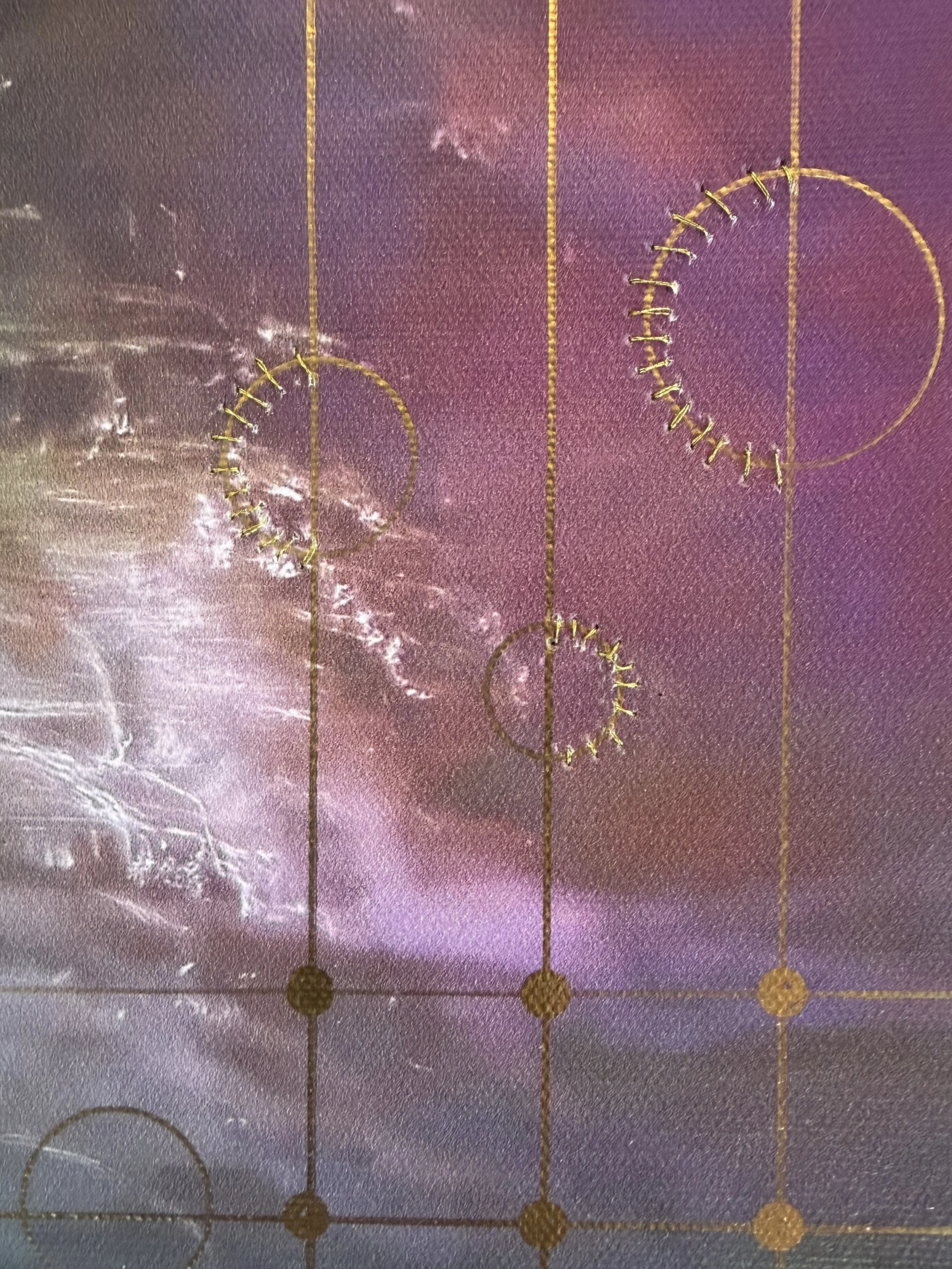 Image 4 of 6
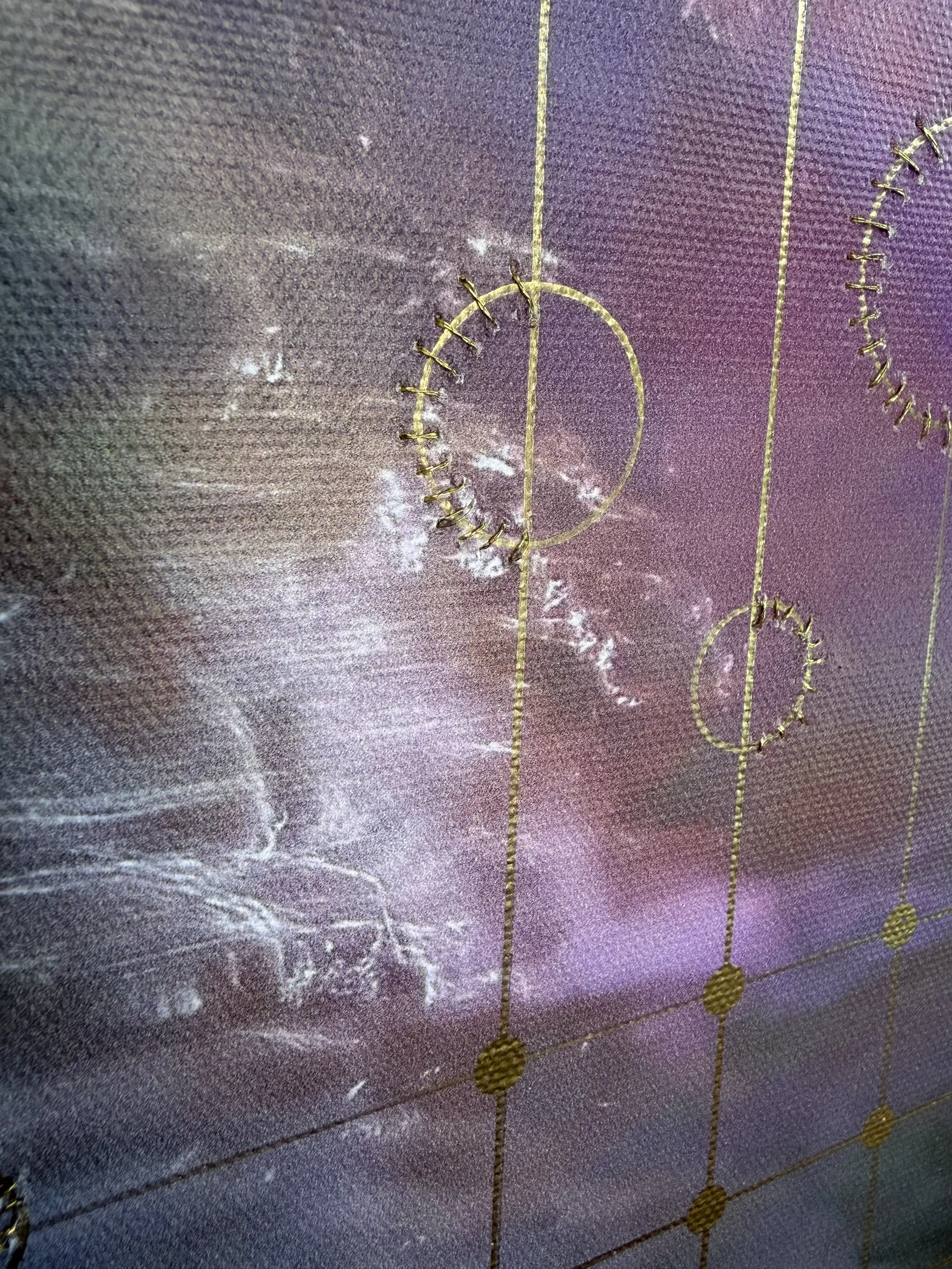 Image 5 of 6
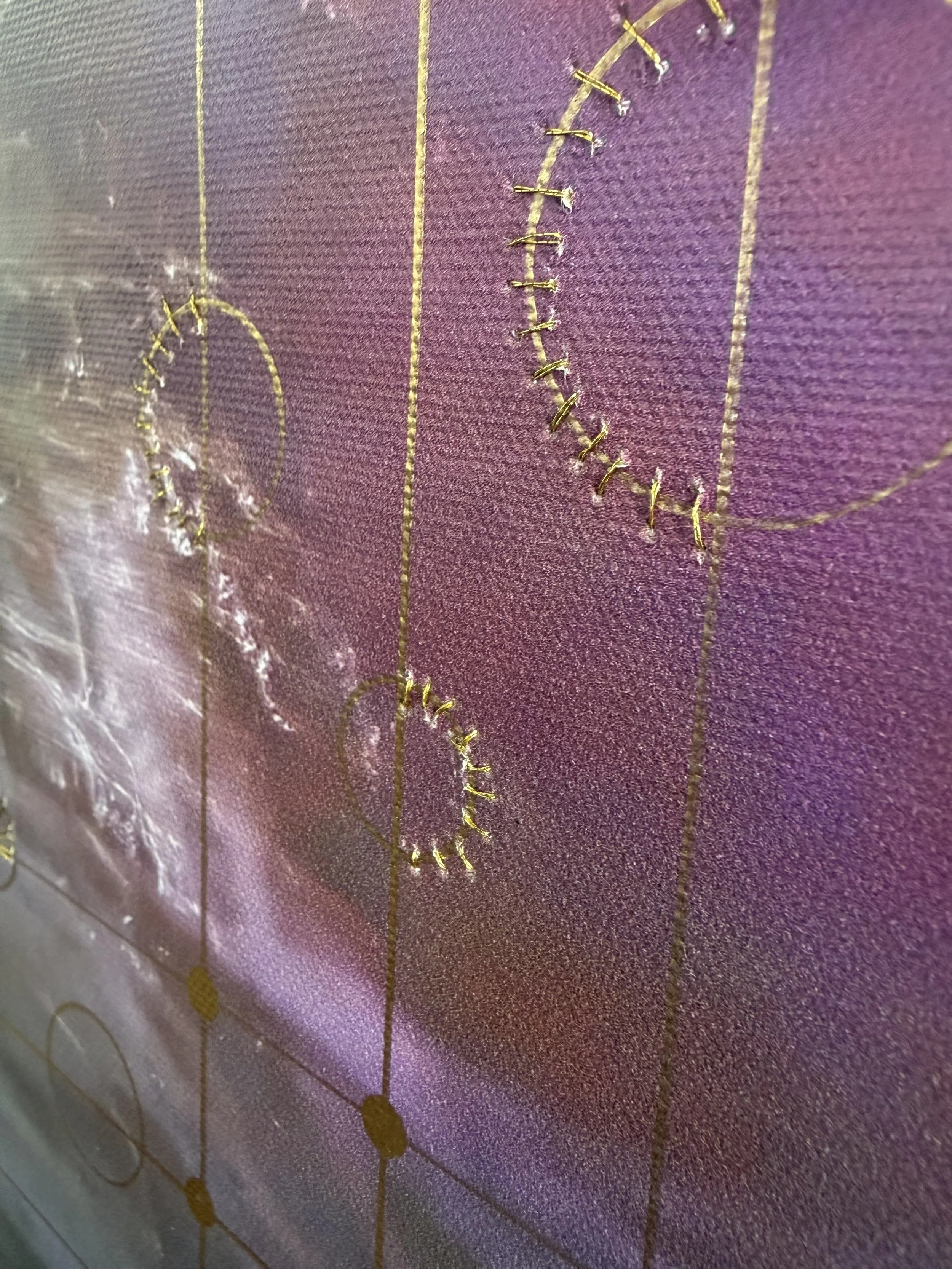 Image 6 of 6