“Illusion is the first of all pleasures”
― Voltaire
Camouflage is a mixed media canvas set in a dense green forest where a figure with a white animal mask moves through the blur of trees. The body is human, the head is not, and that split becomes the first fracture in the image. The mask is calm, almost gentle, but its stillness feels wrong against the motion of the background, like a memory frozen inside a moment that refuses to stop.
Across this scene runs a precise lattice of gold lines, a quiet grid that cuts through the soft wilderness. At their intersections sit circular forms, small constellations of points that echo the circle of fifths yet read here as targets, coordinates, or sites of impact. The geometry suggests an attempt to map what cannot be fully understood, to pin down the places where the story keeps looping back.
The piece speaks to the diagnostic language of post traumatic stress disorder, where past danger infiltrates the present and the body moves through familiar spaces with a constant sense of threat. The masked figure carries both anonymity and exposure, visible yet emotionally concealed. The forest becomes a corridor for flashbacks, and the grid feels like an invisible system of triggers laid over everyday life.
Camouflage lingers in that tension between what appears logical and what is felt. The lines promise order, the mask promises safety, but neither fully delivers. Instead, the canvas holds the uneasy truth of PTSD, where the mind keeps arguing that everything is fine while the nervous system knows the forest is still alive with echoes.
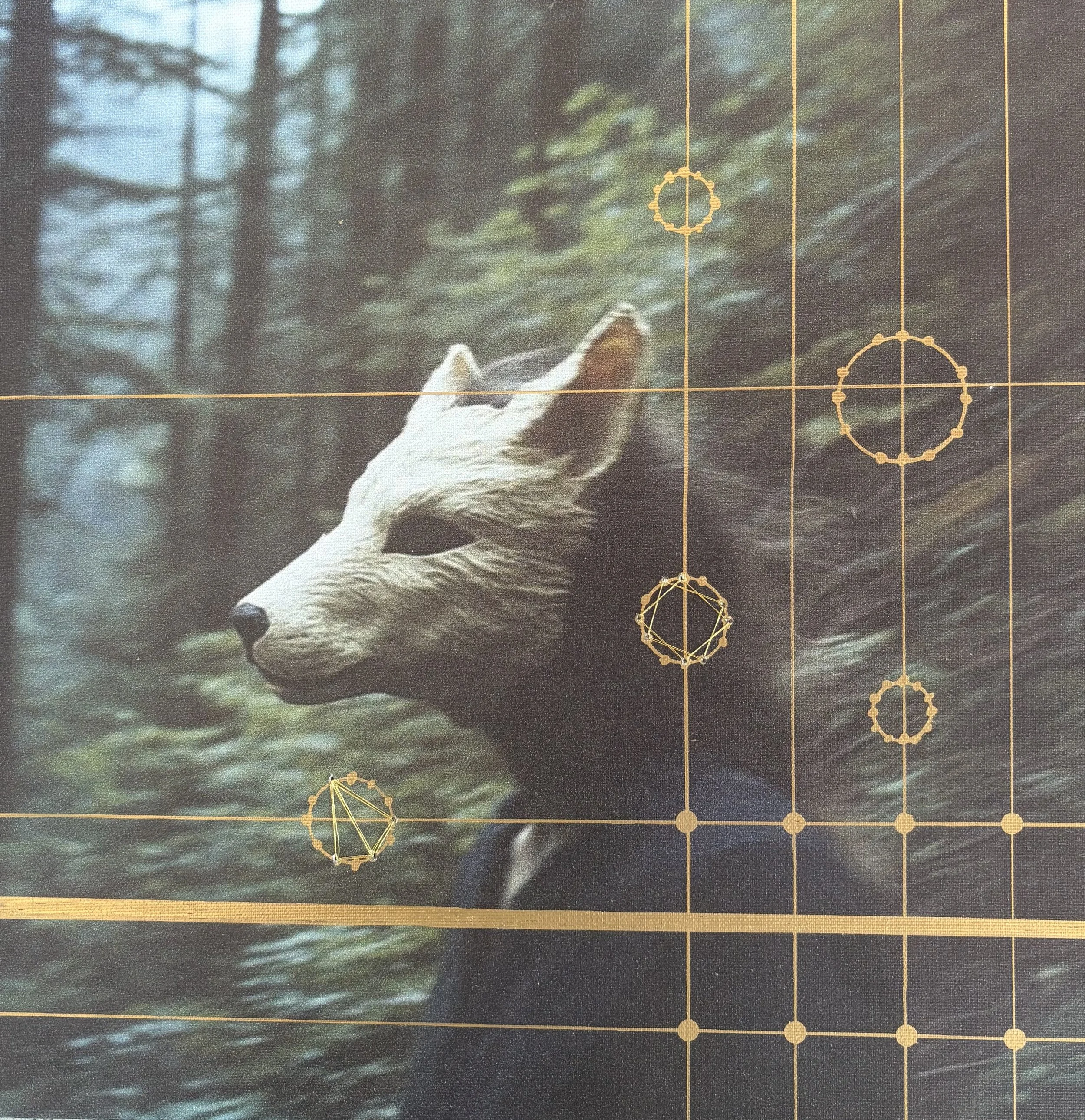 Image 1 of 6
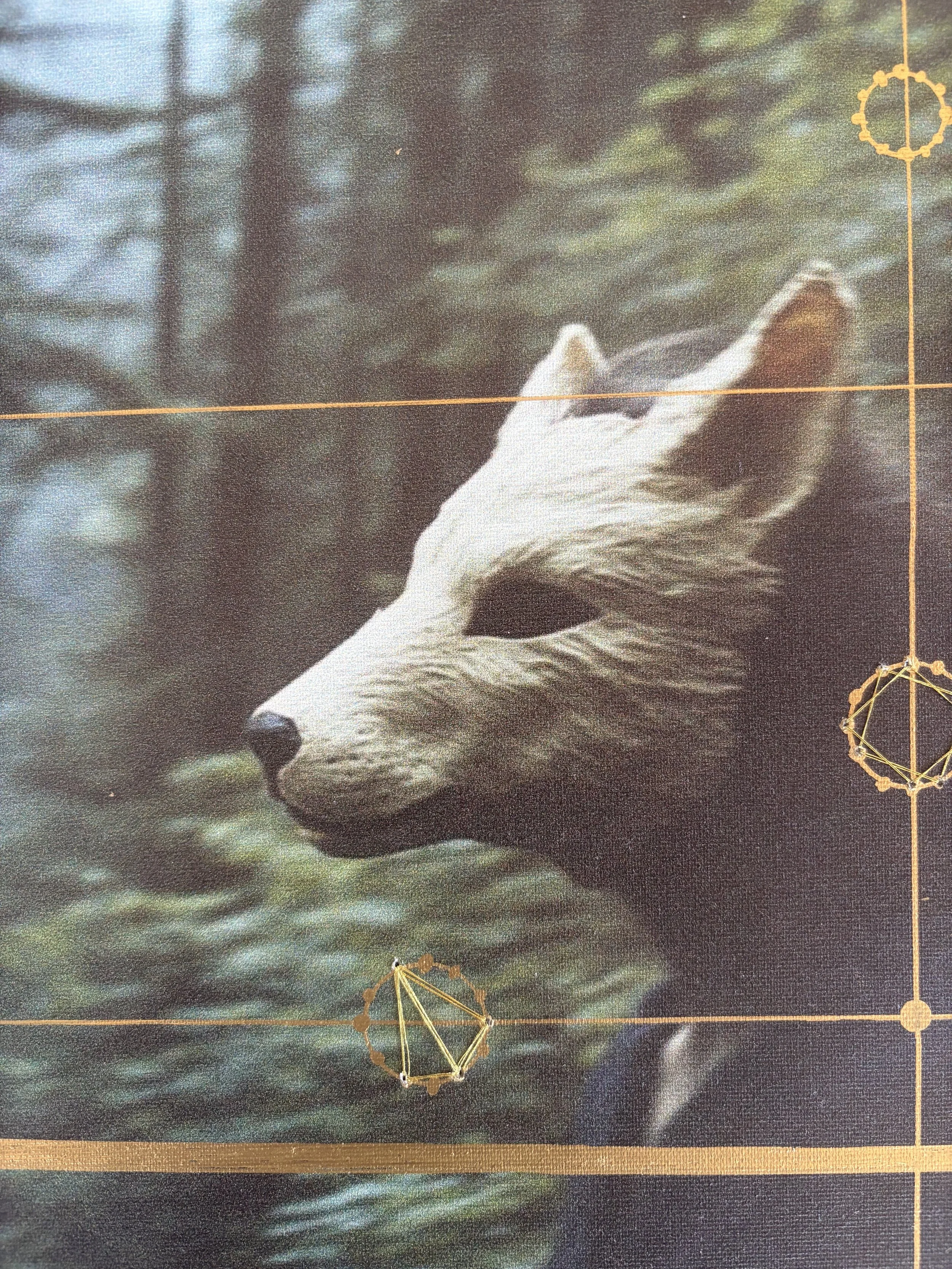 Image 2 of 6
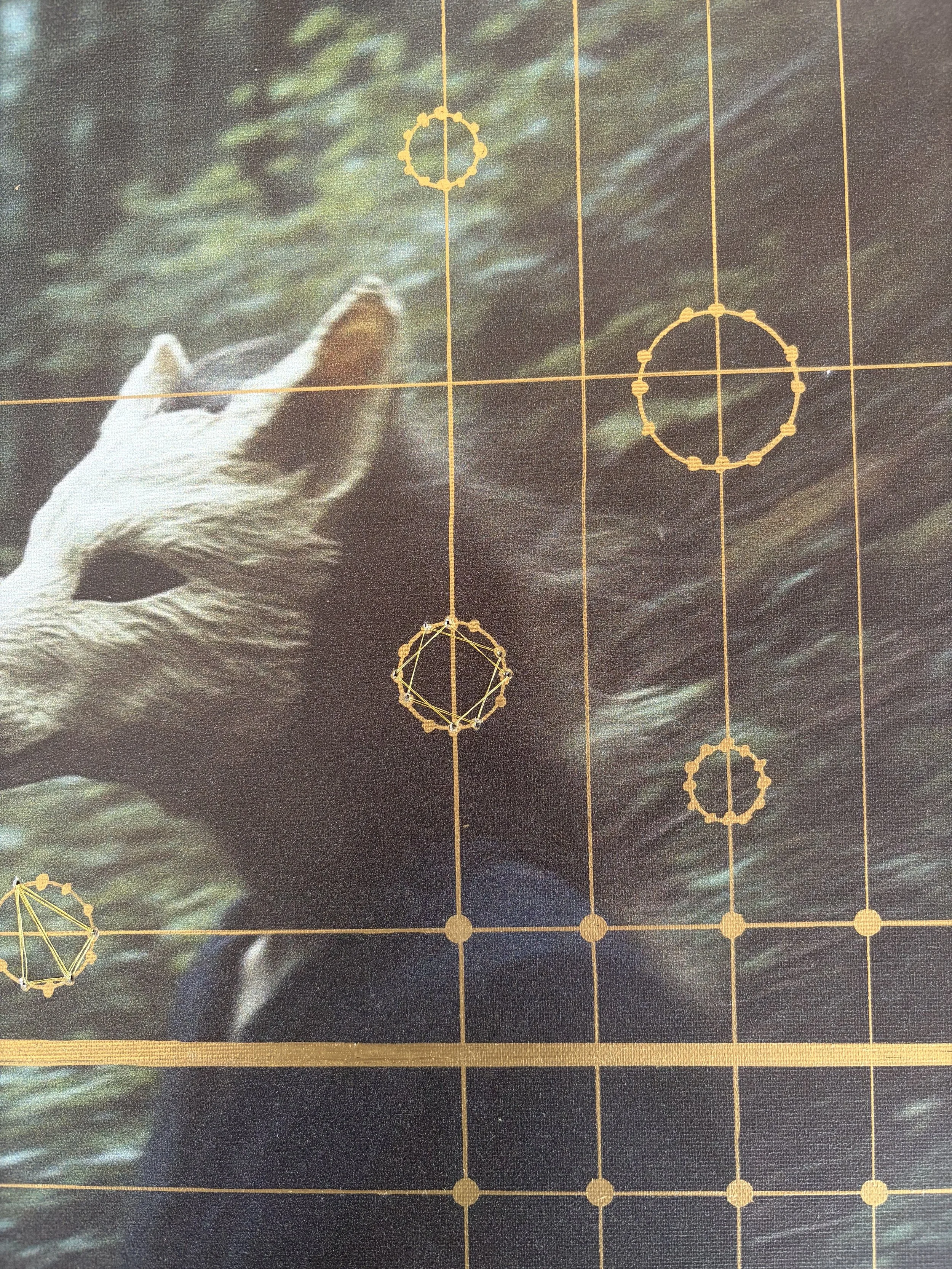 Image 3 of 6
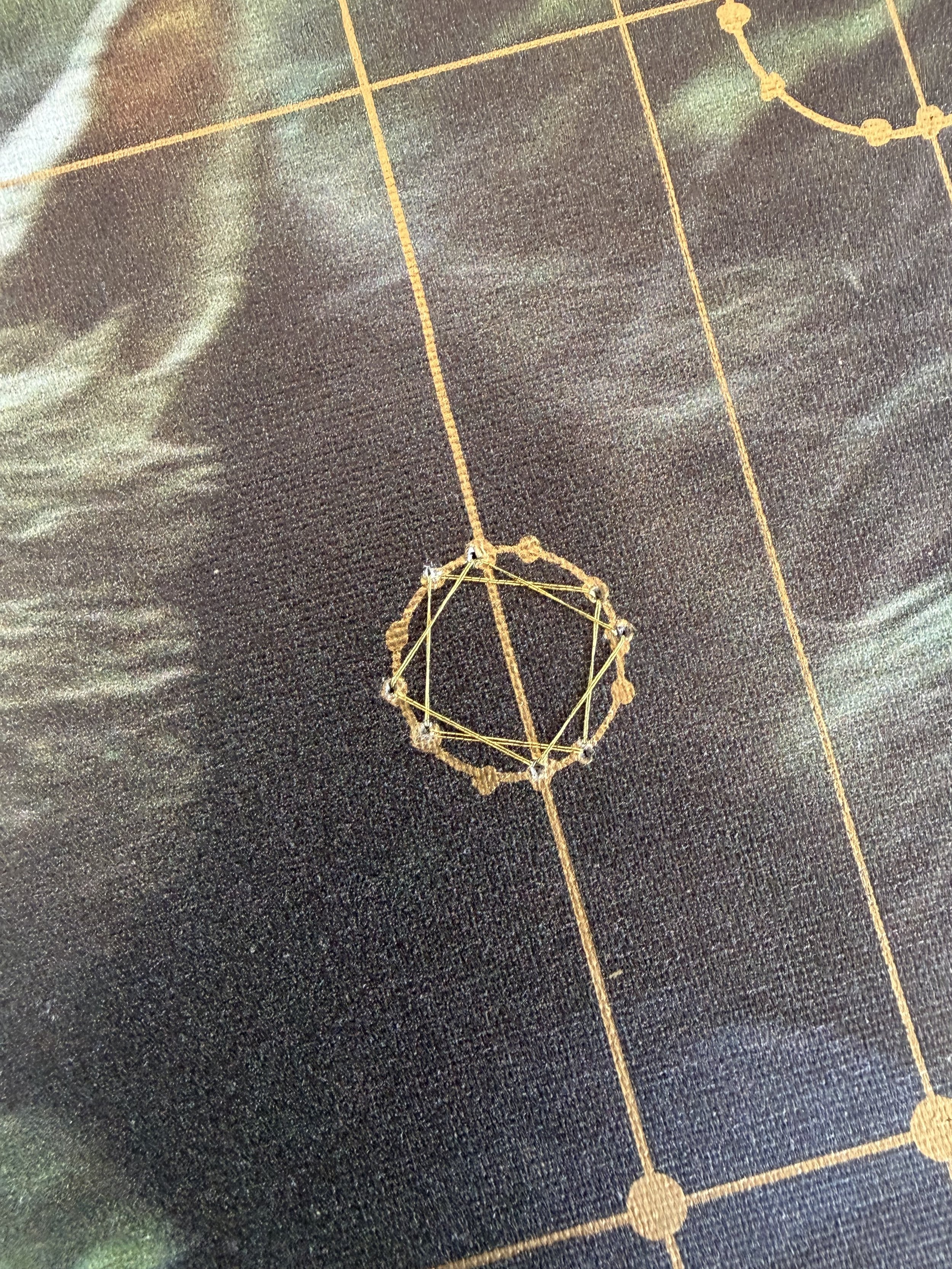 Image 4 of 6
 Image 5 of 6
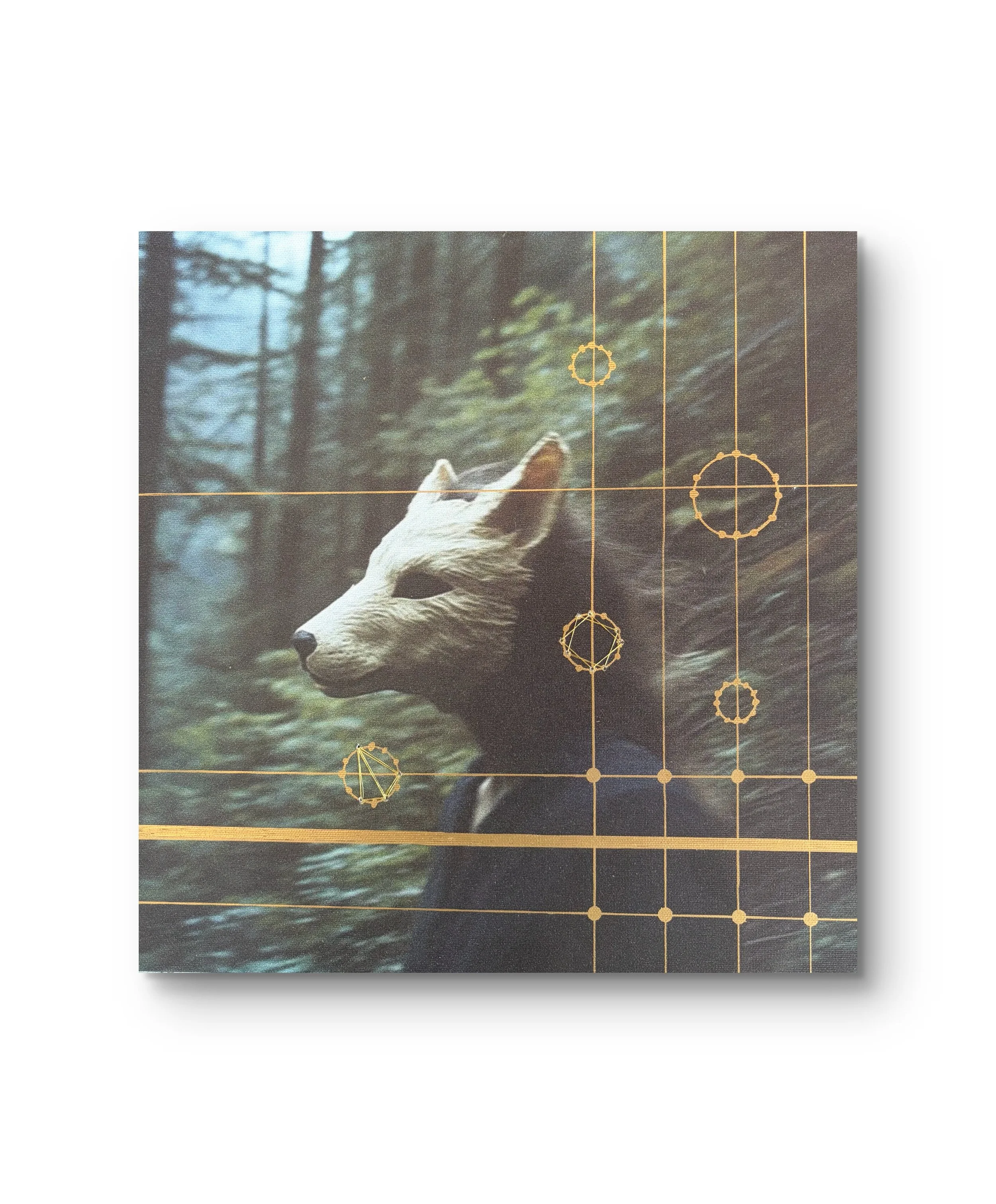 Image 6 of 6