“I did not care what it was all about. All I wanted to know was how to live in it. Maybe if you found out how to live in it you learned from that what is was all about.”
-The Sun Also Rises by Ernest Hemingway
Immarcescible is an 11x14 canvas shaped by the full-spectrum extremity of Bipolar 1 as described in the DSM-5, where mood ruptures rather than shifts, careening between blazing excess and profound collapse without warning or intent. The title means that which cannot wither, a word for something that refuses to fade even when everything around it should, and it speaks directly to the persistence of a condition that burns and endures simultaneously. The figure at the center exists mid-dissolution, her face caught in velocity, hair sweeping across the frame as if wind and fire are moving through her at once. Layered against her skin and overtaking her gaze are chrysanthemum, golden and fiercely warm. In many cultures, chrysanthemums carry meanings tied to longevity, resilience, and the endurance of beauty under pressure. In Japanese tradition they are associated with the sun itself, a flower that represents life lived at full intensity. Here they become a symbol for the manic pole, the compulsion toward radiance, the way mania pulls the entire self toward something that burns with its own light.
The gold gilding forms a grid drawn from the circle of fifths, embedding specific notes within its intersecting lines that correspond to the DSM diagnostic criteria for Bipolar 1. The embroidery traces these sounds across the canvas in two distinct registers. At the eyes, dense yellow thread erupts in thick, energized bursts that are chaotic and luminous, the visual frequency of elevated mood, of racing thoughts and grandiosity filling the frame. Below, the gold thread thins to delicate, tentative loops and nested circles contracting inward, carrying the weight of the depressive pole: the withdrawal, the psychomotor slowing, the world gone quiet and heavy. The grid holds its structure even as the image beneath it blurs and burns, insisting on the simultaneity at the heart of the diagnosis: the same person containing the eruption and the collapse, the blaze and the retreat, neither state erasing the one that came before. The title names the truth of it: this does not wither and, instead, persists, radiant and relentless, in the body that carries it.
 Image 1 of 8
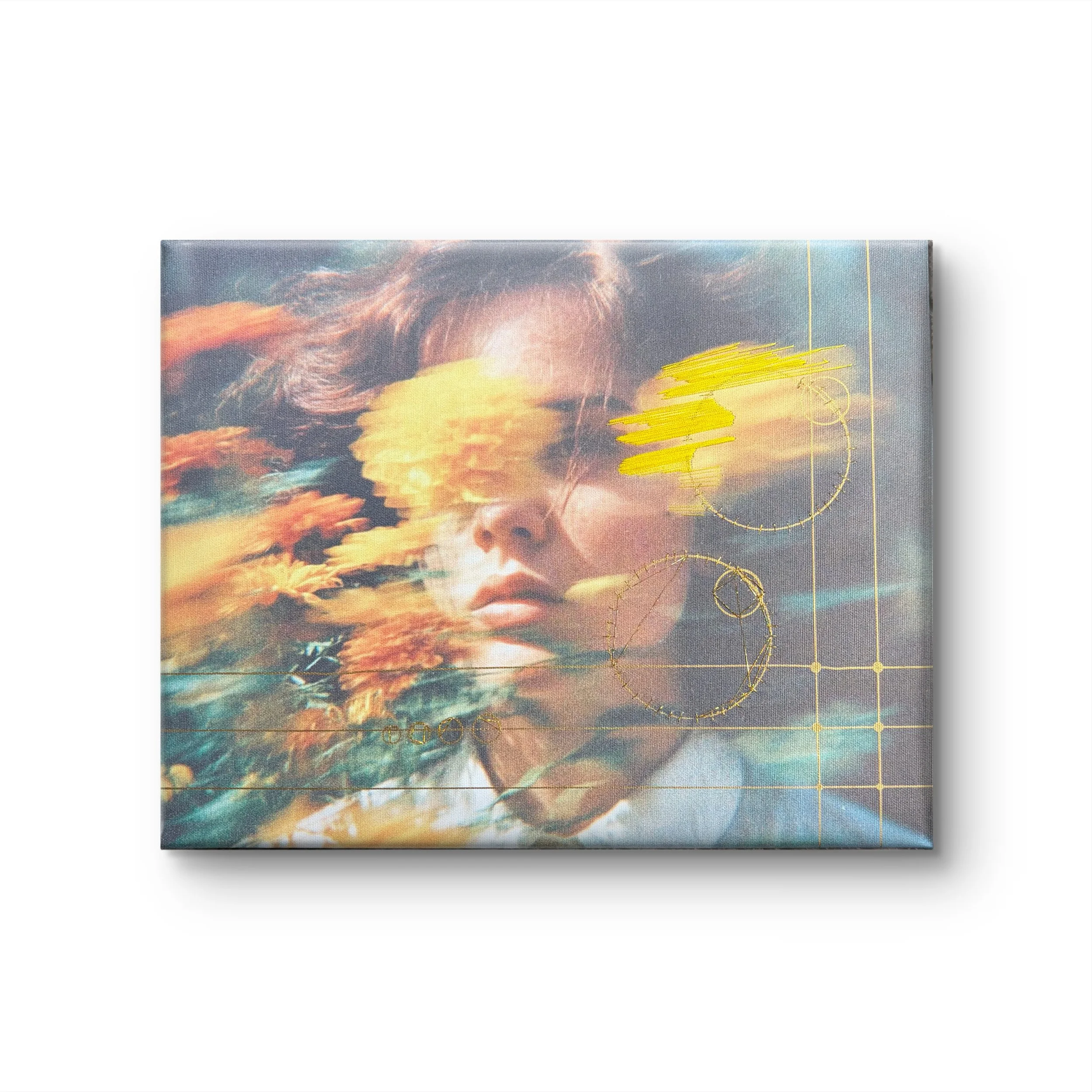 Image 2 of 8
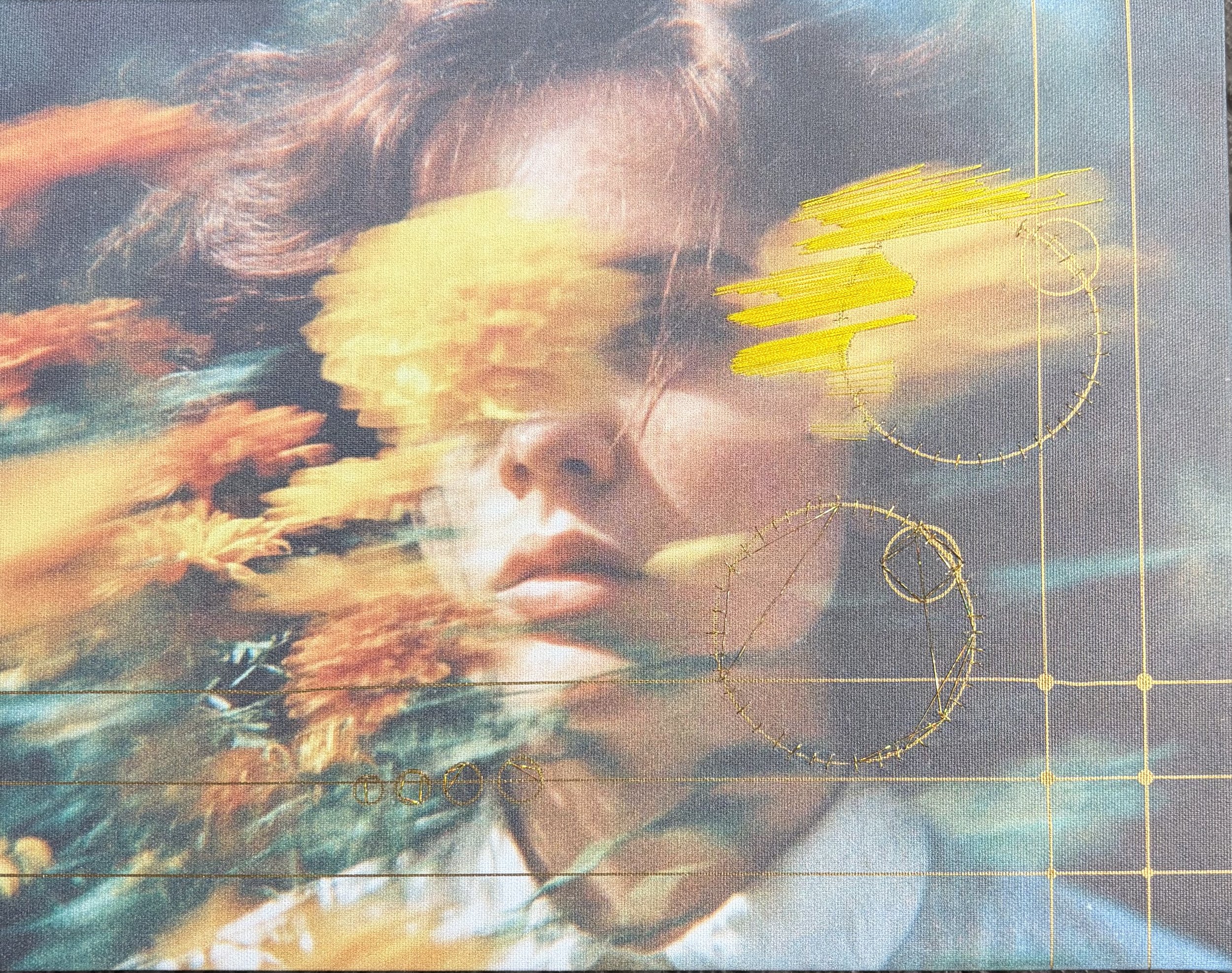 Image 3 of 8
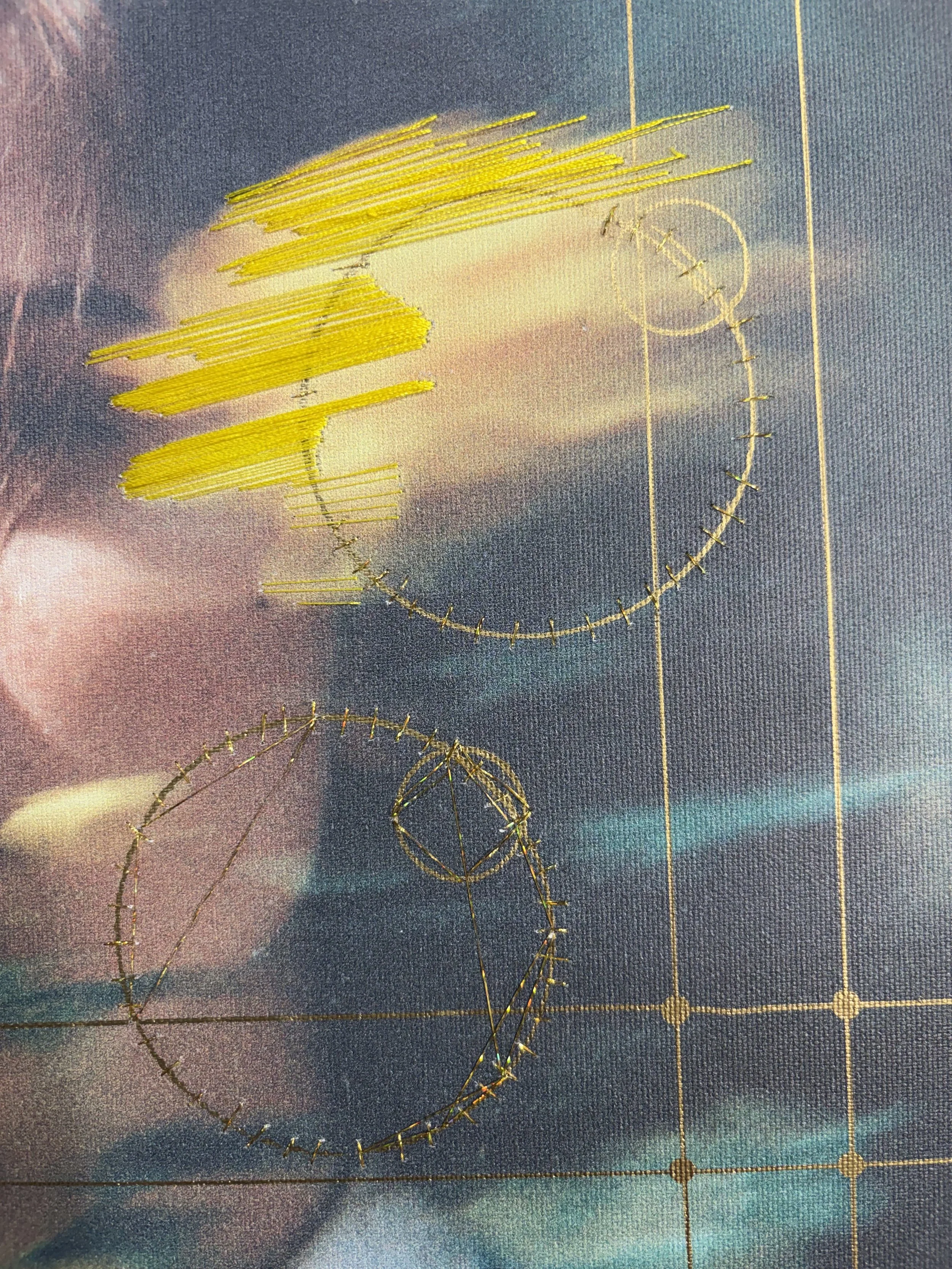 Image 4 of 8
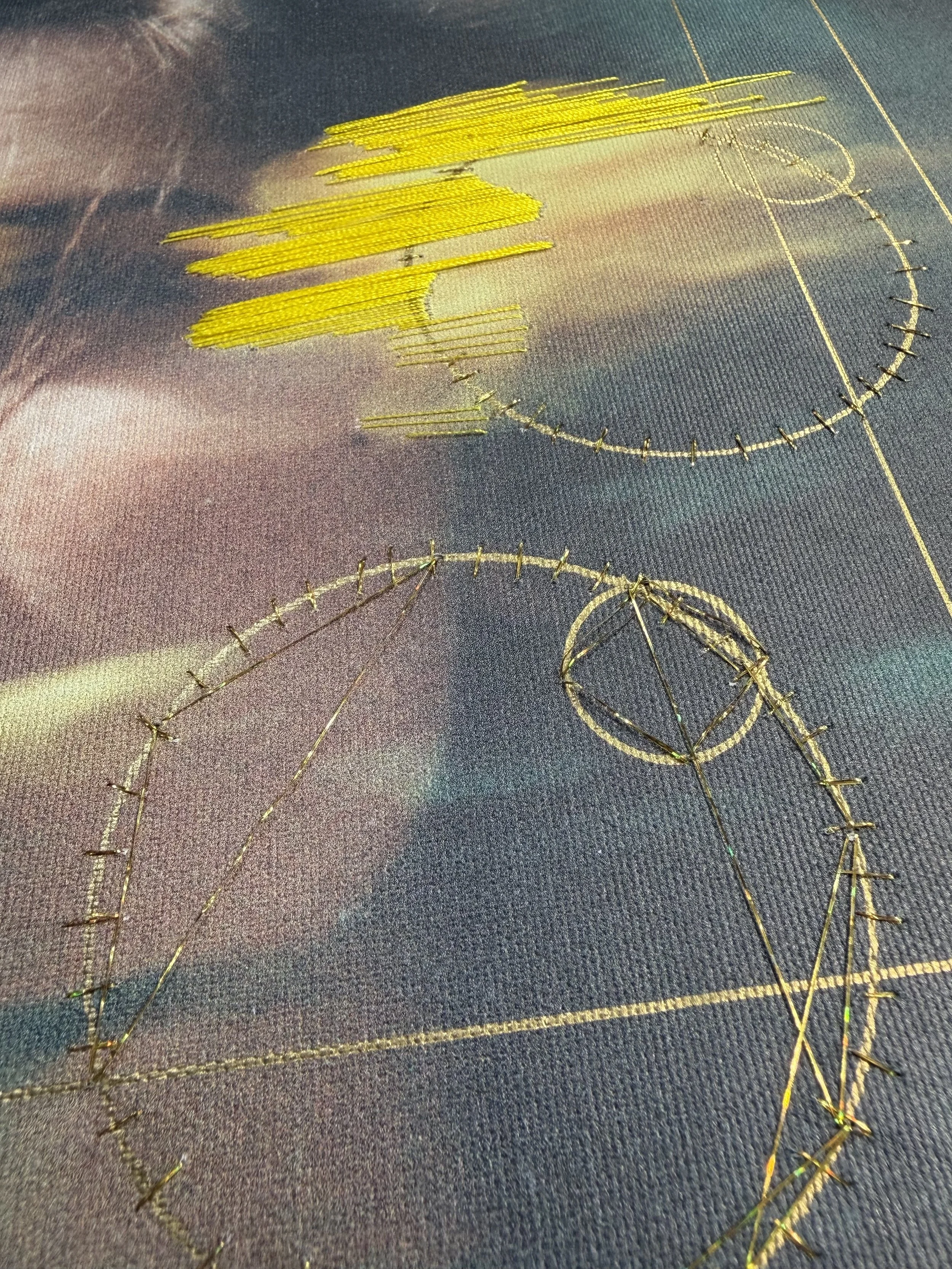 Image 5 of 8
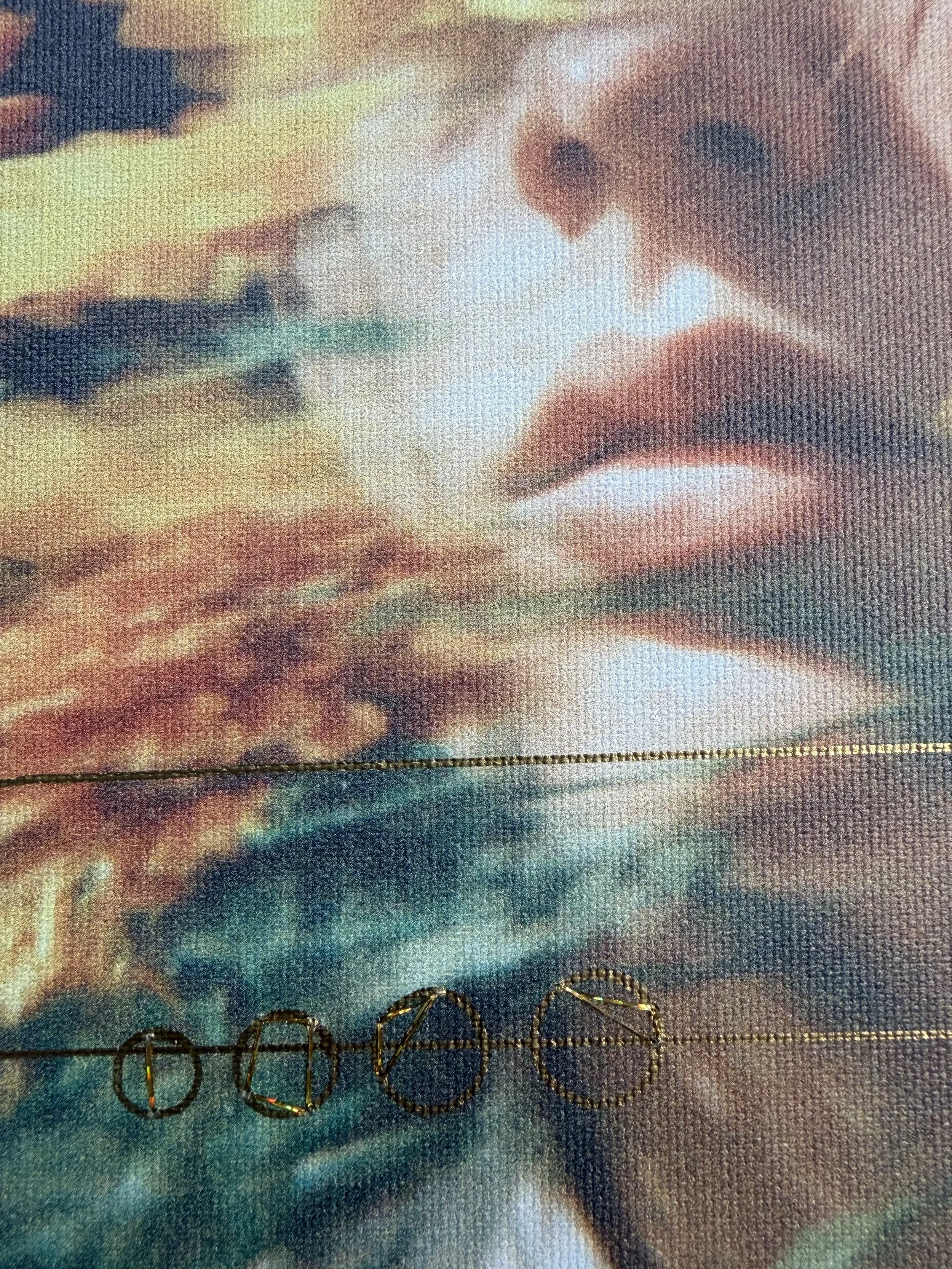 Image 6 of 8
 Image 7 of 8
 Image 8 of 8