"I am a series of small victories and large defeats and I am as amazed as any other that I have gotten from there to here."
— Charles Bukowski
"Ichverlust" is an 12×12 canvas charting the precise psychological coordinates of a self that has become foreign to itself. The subject's expression carries something quiet and dangerous: a compressed determination, the particular anger of someone who knows exactly what has been taken from her and has already decided to remember it.
She is submerged in lilacs, and this is intentional. Lilacs carry the weight of first emotion, of memory that arrives before language, of grief that smells like spring. In the Victorian floriography that gave flowers their secret grammar, lilacs speak of the first stirrings of love and of its passing, of something that bloomed before the self was armored enough to protect it. Surrounding her in their excessive, suffocating abundance, they remind her of everything the dissolution of self quietly erases.
Overlaid across the composition, the Circle of Fifths inscribes its gold geometry, the mathematical skeleton of musical harmony, of tension seeking resolution. The mind reaches for structure, for pattern, for the coordinates of a self that has stopped responding to its own name. The spectacles balanced on her features promise focus and render the search more visible, more earnest, more heartbreaking in its precision.
The lilacs bloom regardless. She remains among them, determined and quietly furious, holding the memory of herself like something she refuses to set down.
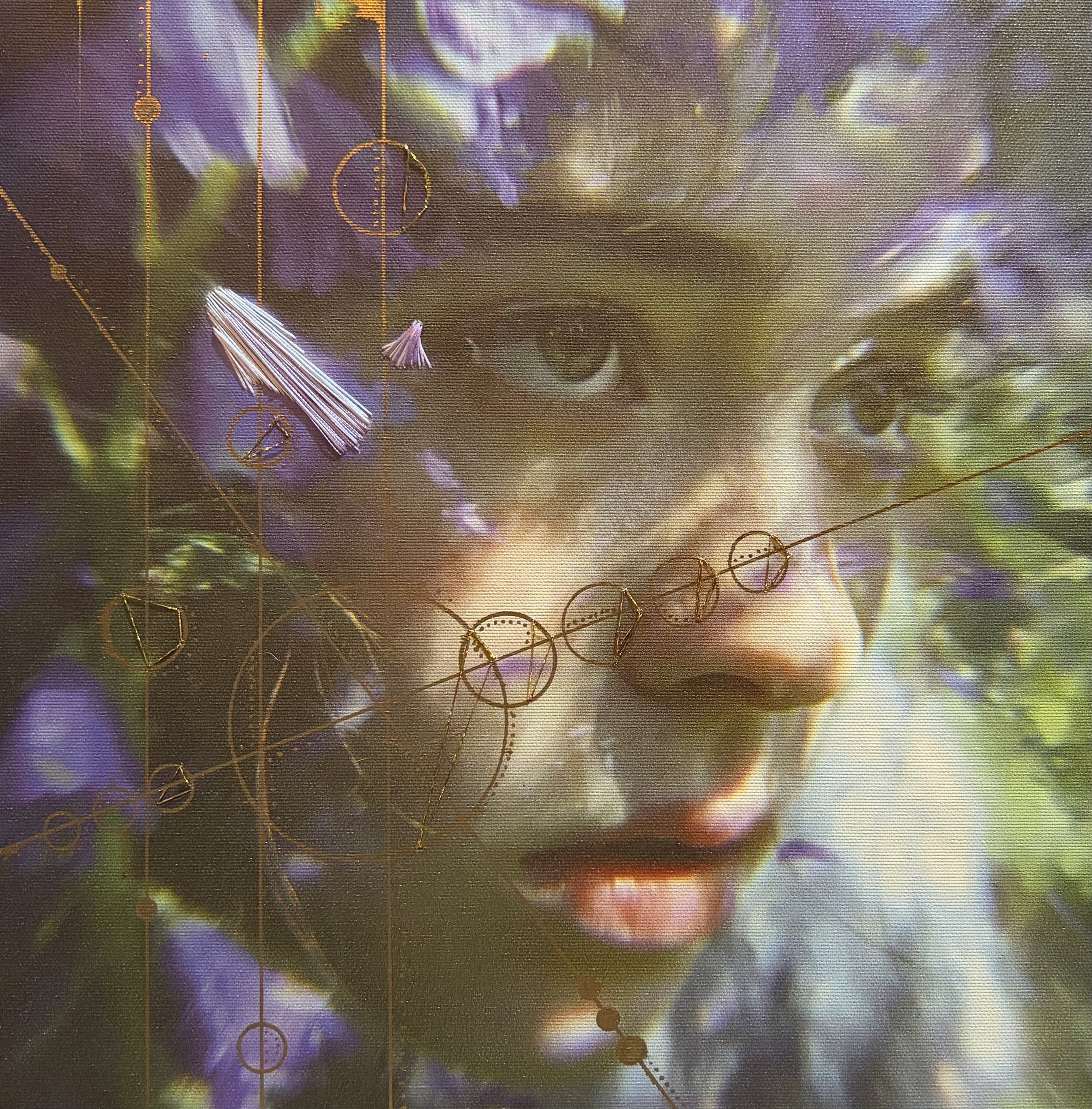 Image 1 of 8
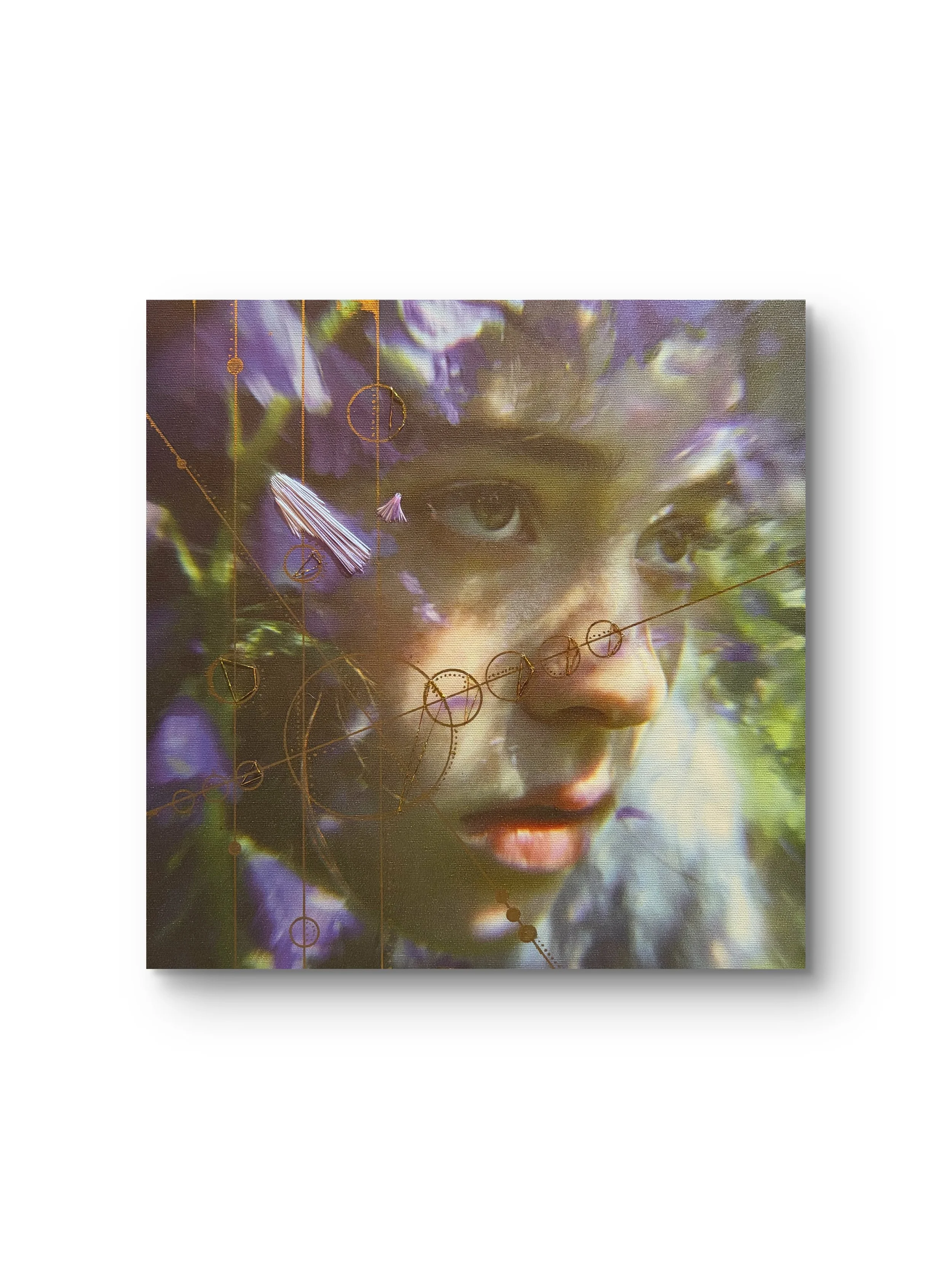 Image 2 of 8
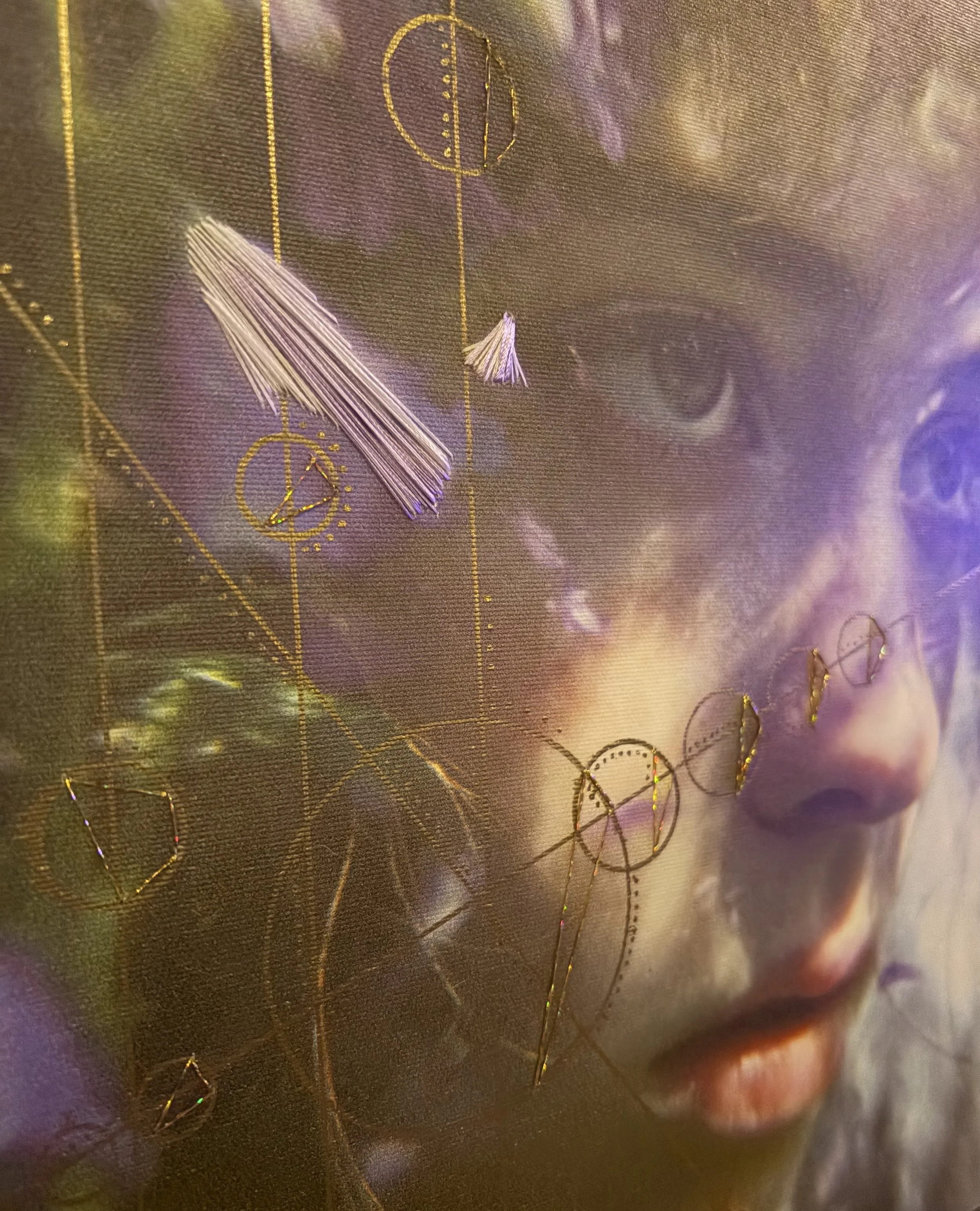 Image 3 of 8
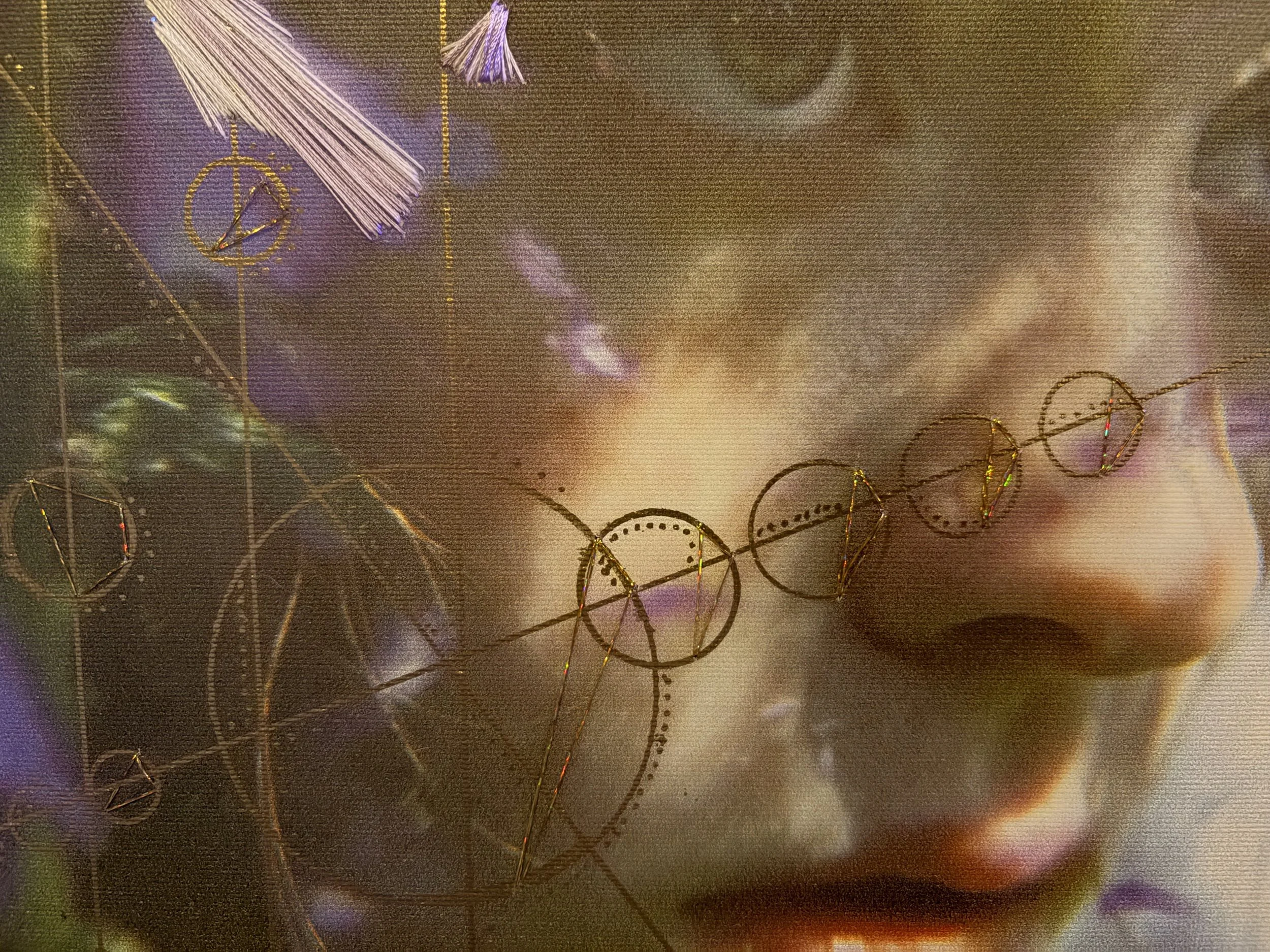 Image 4 of 8
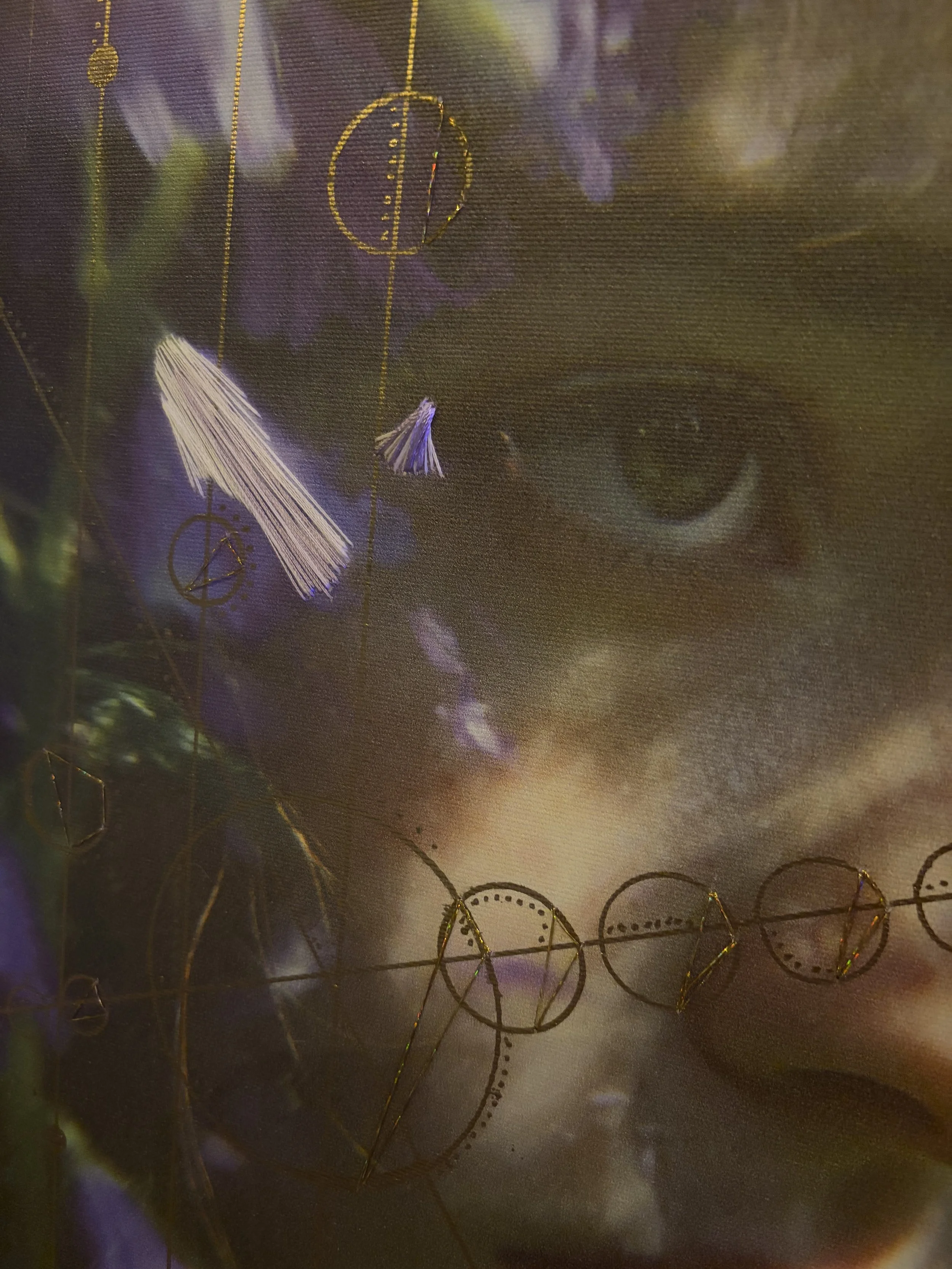 Image 5 of 8
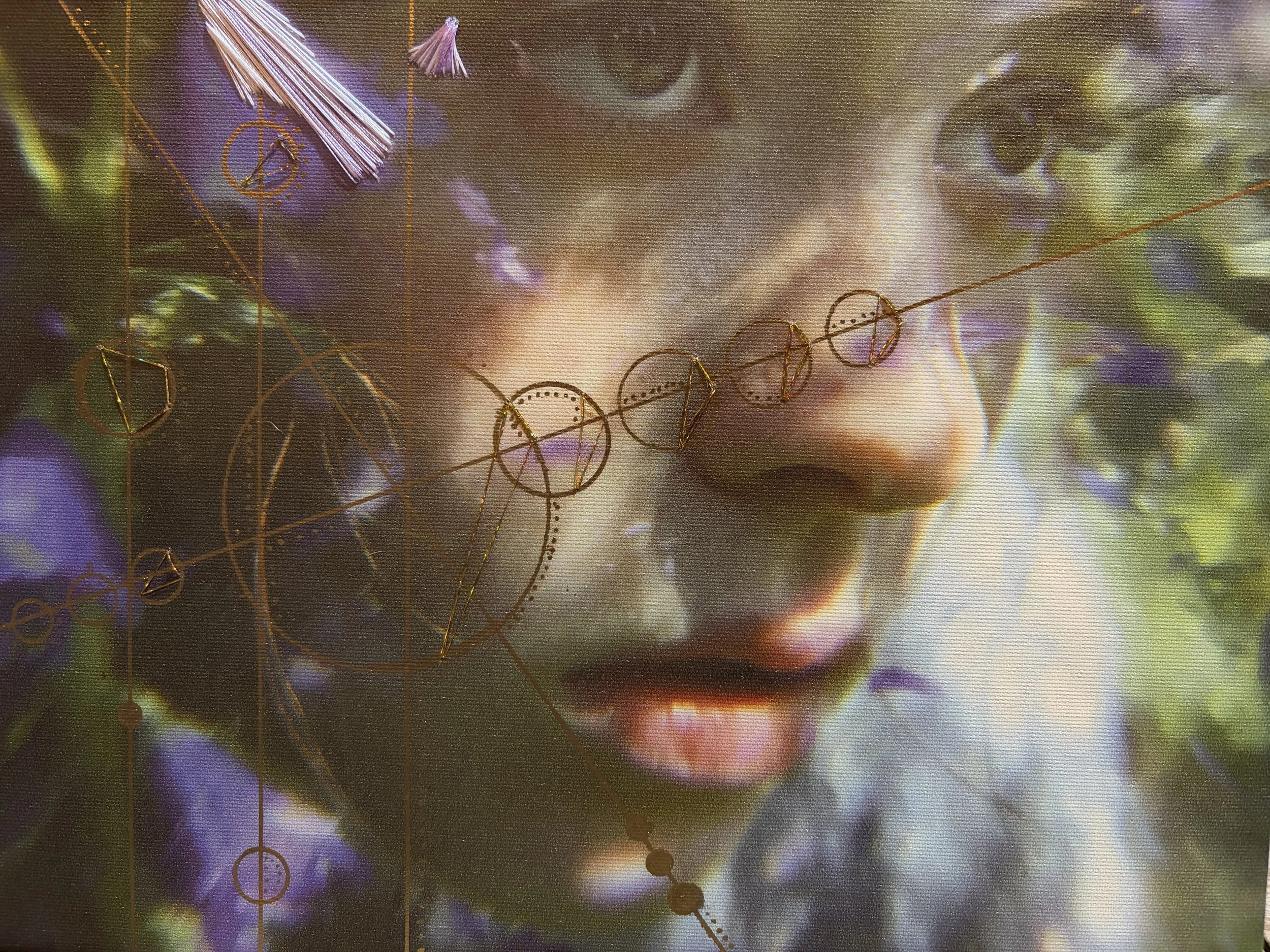 Image 6 of 8
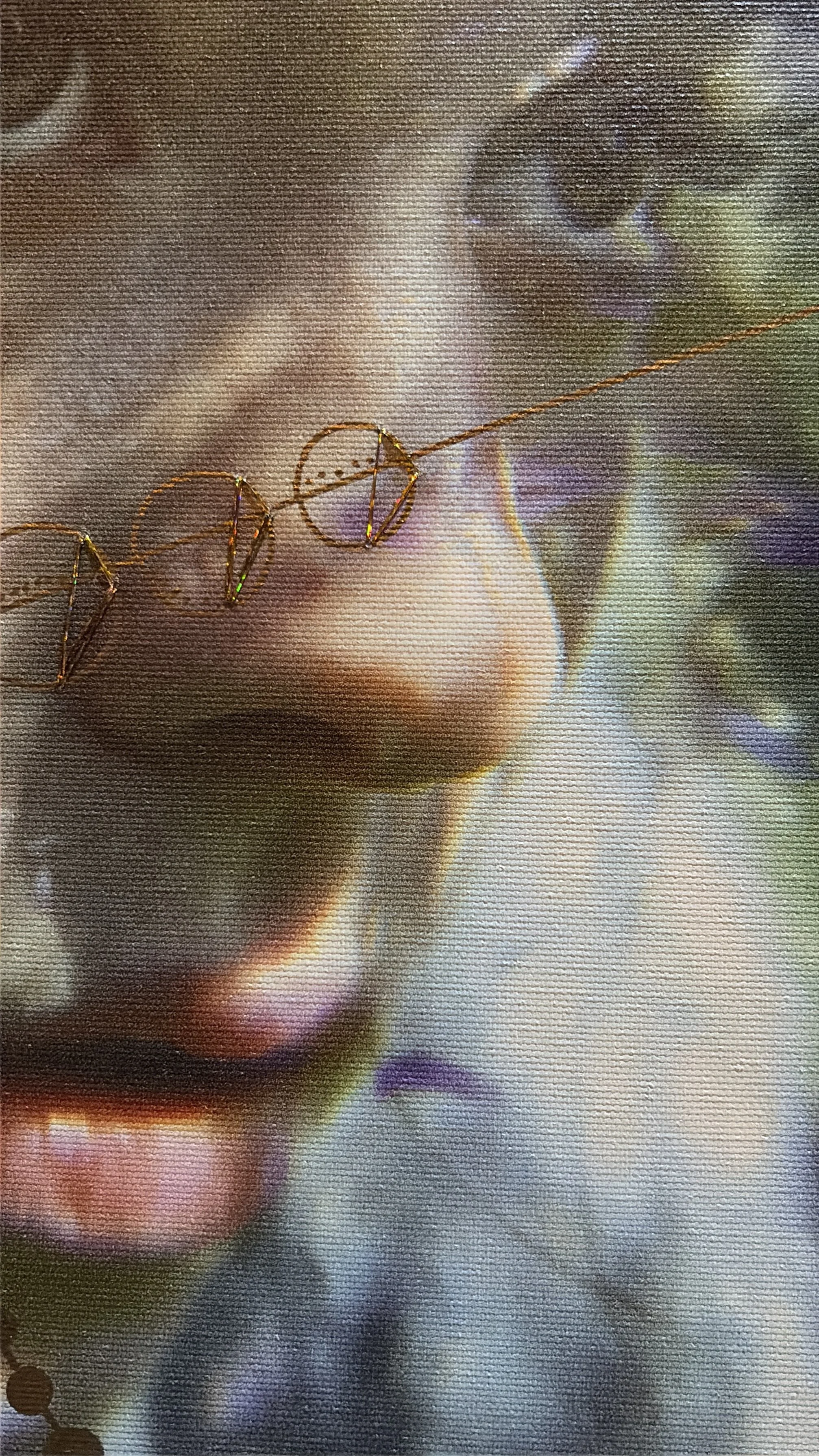 Image 7 of 8
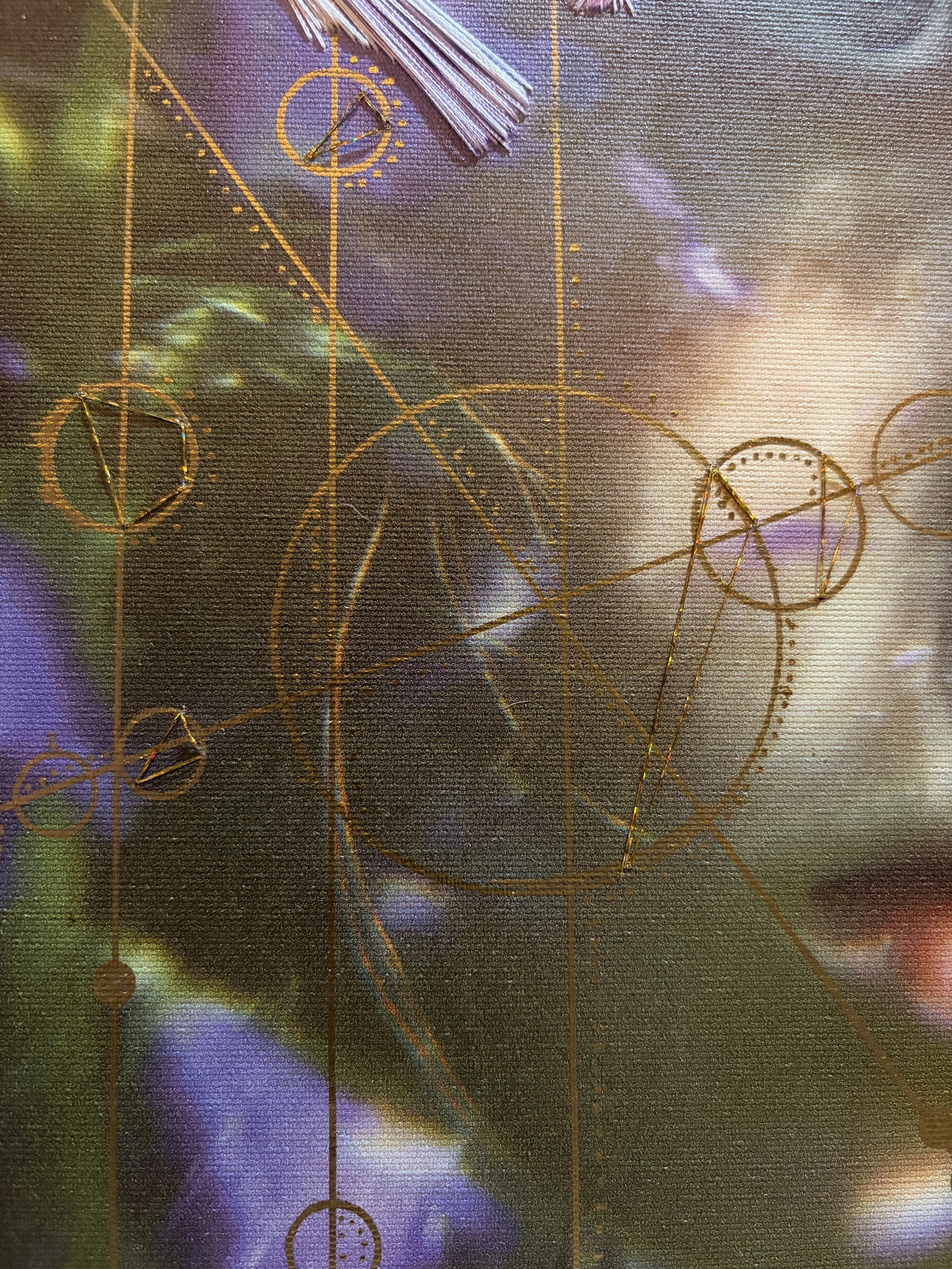 Image 8 of 8