 Image 1 of 5
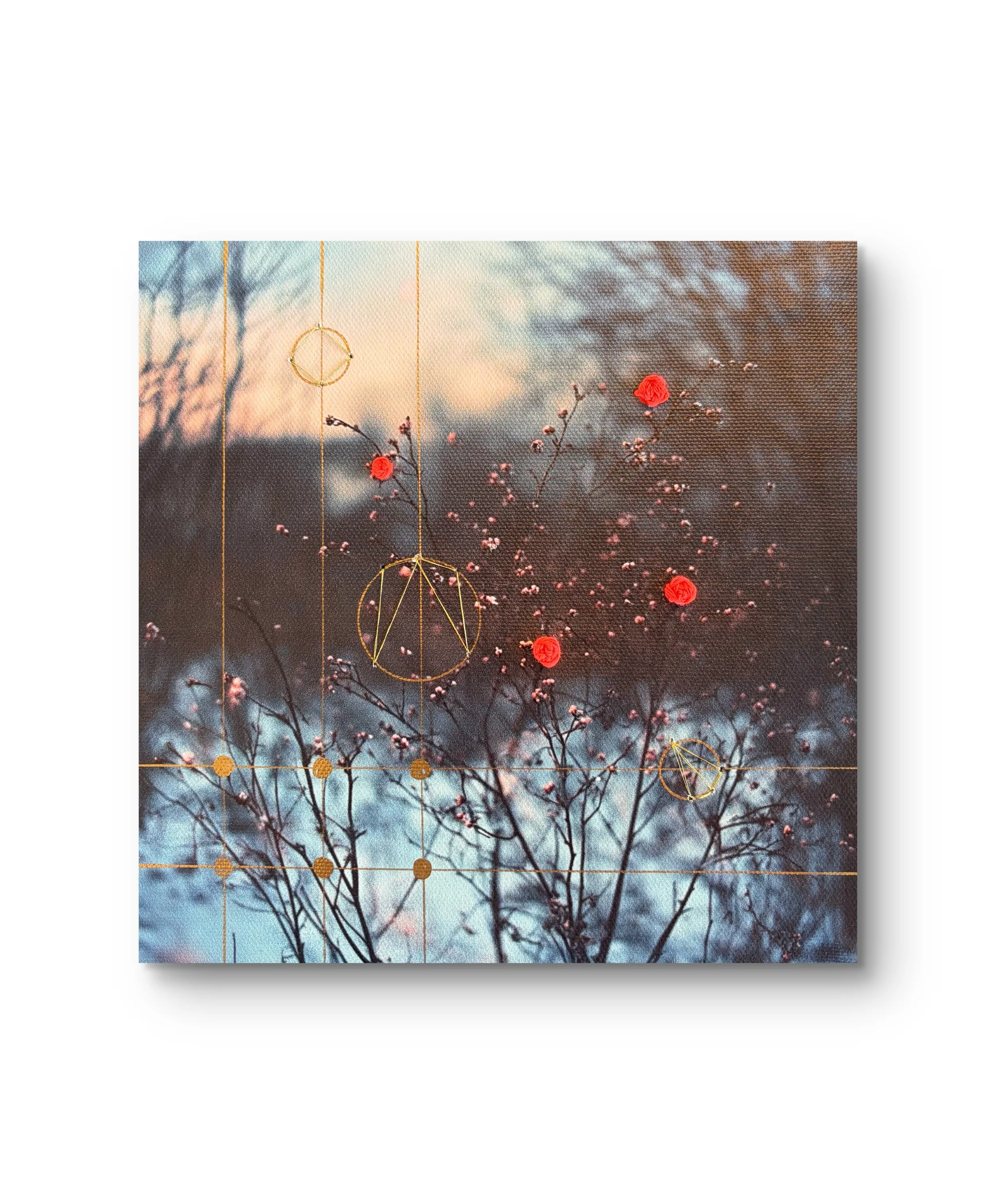 Image 2 of 5
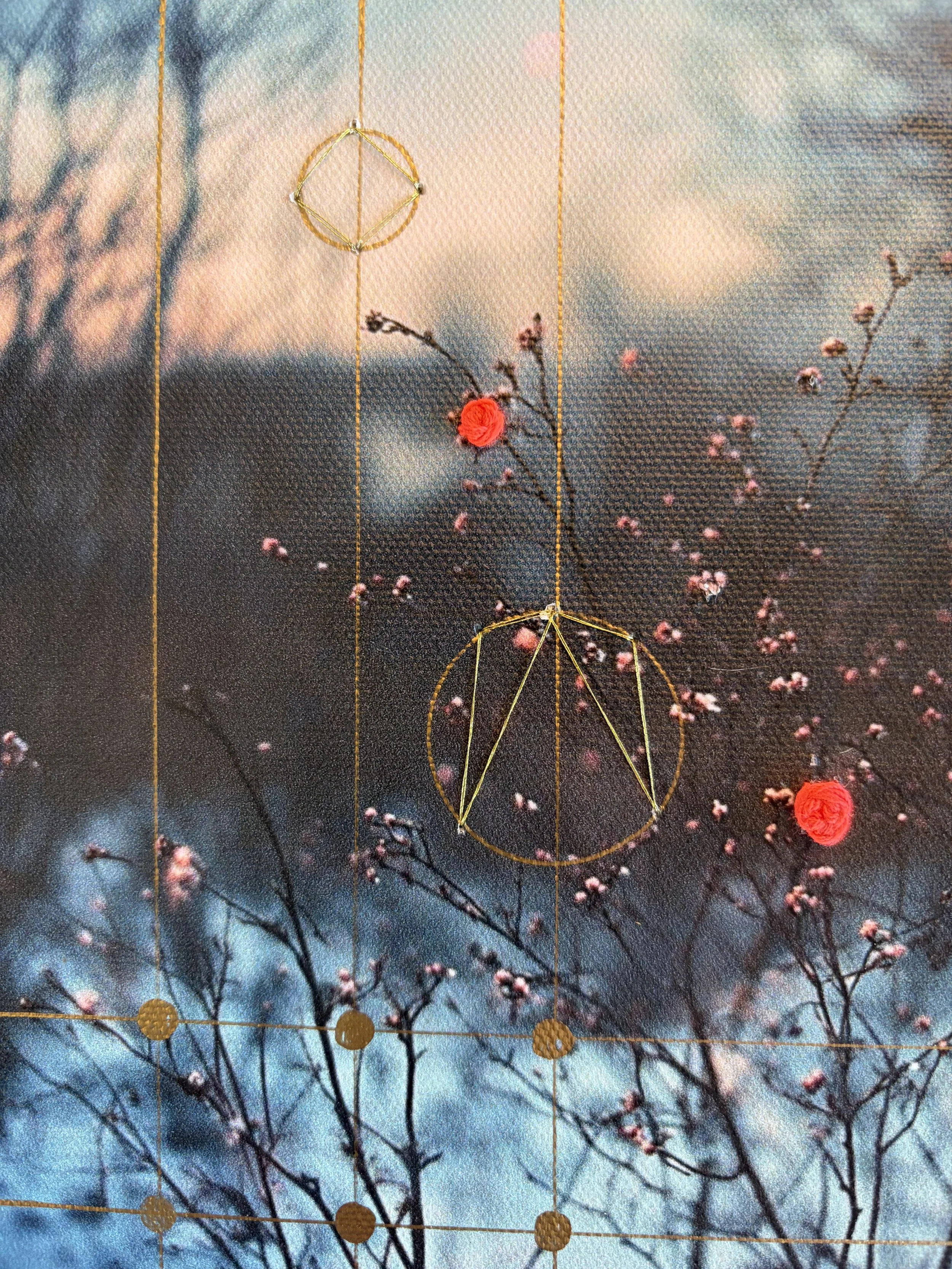 Image 3 of 5
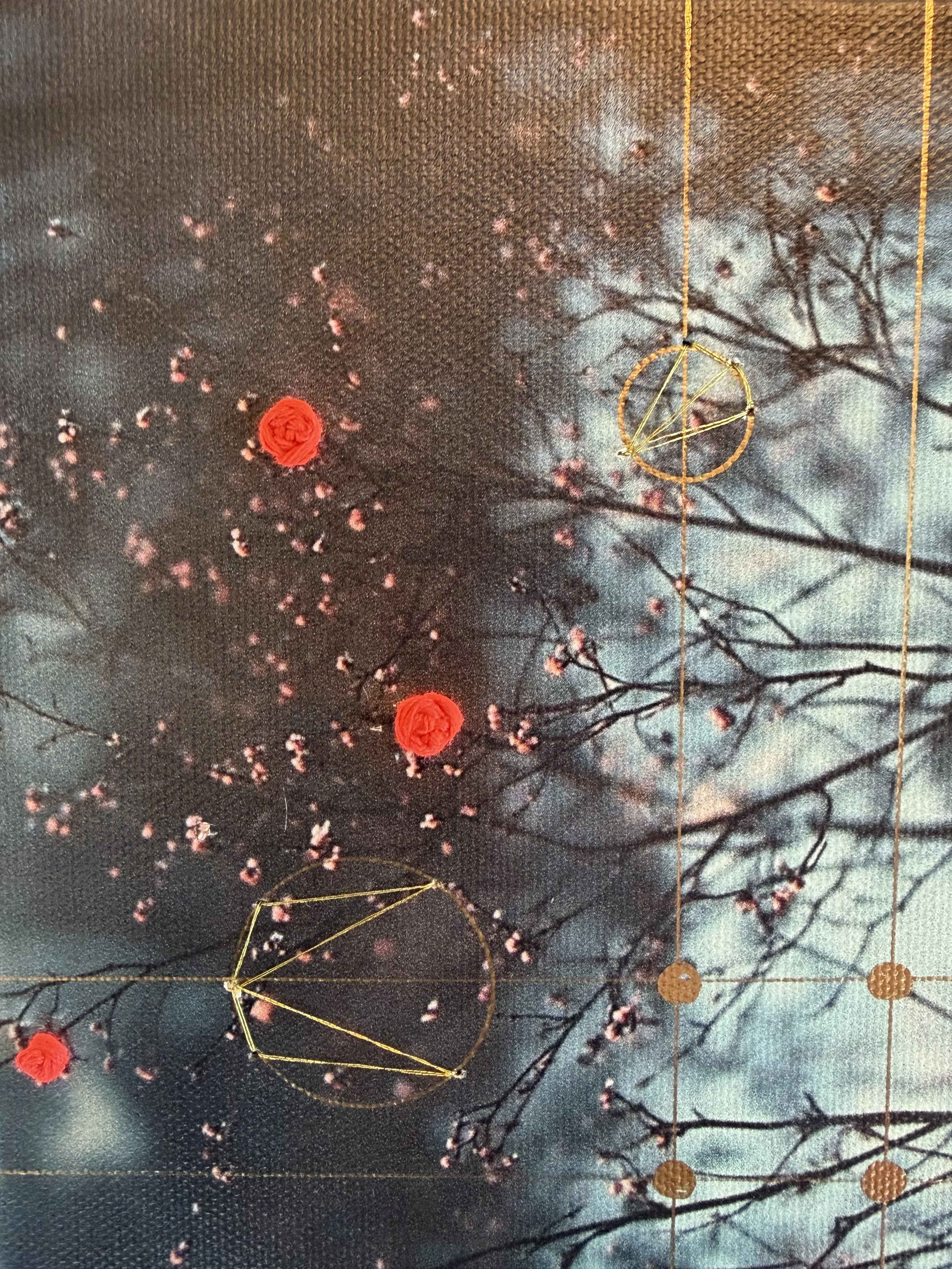 Image 4 of 5
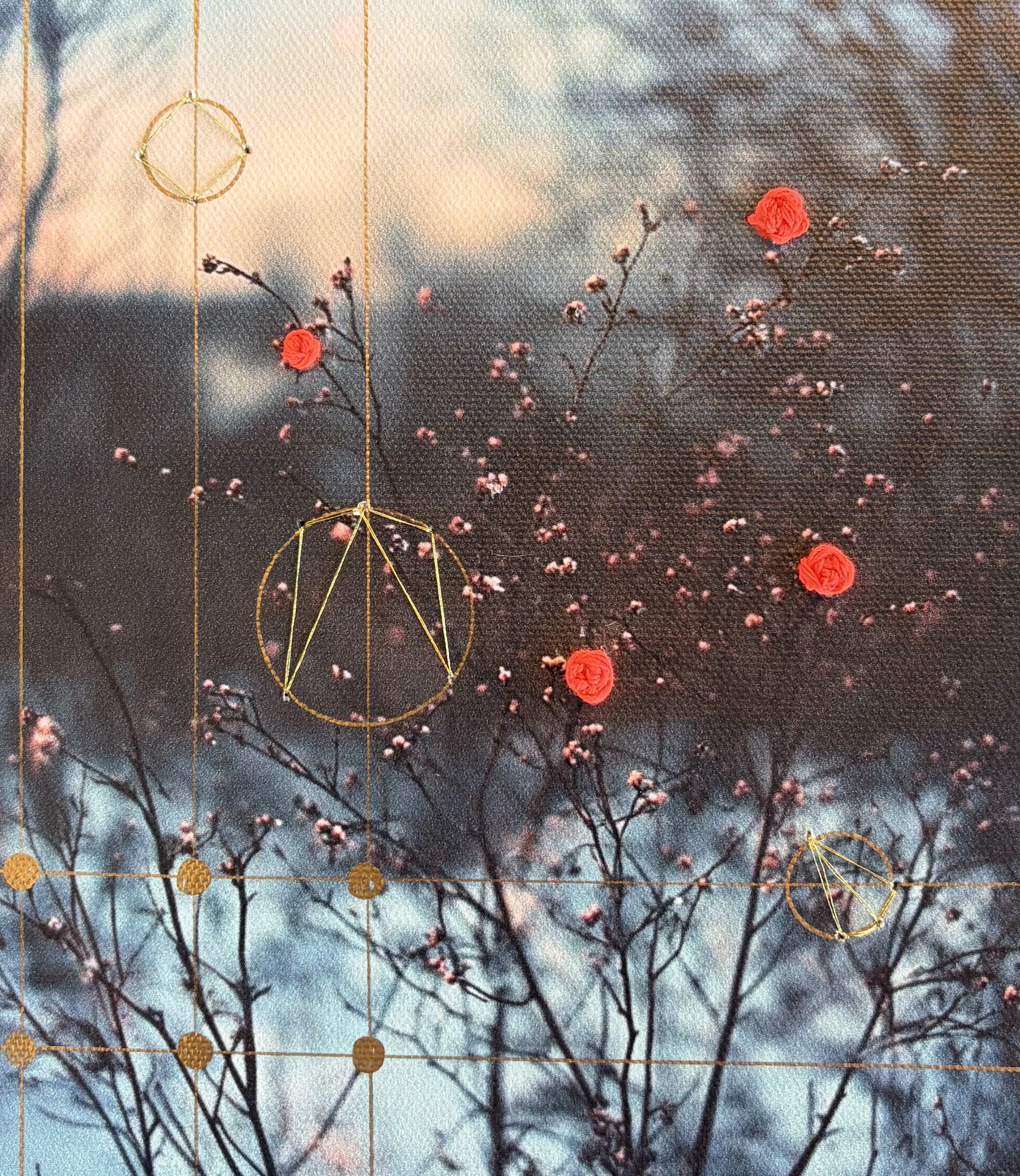 Image 5 of 5
“The good and the beautiful is not forgotten; it lives in legend and in song.”
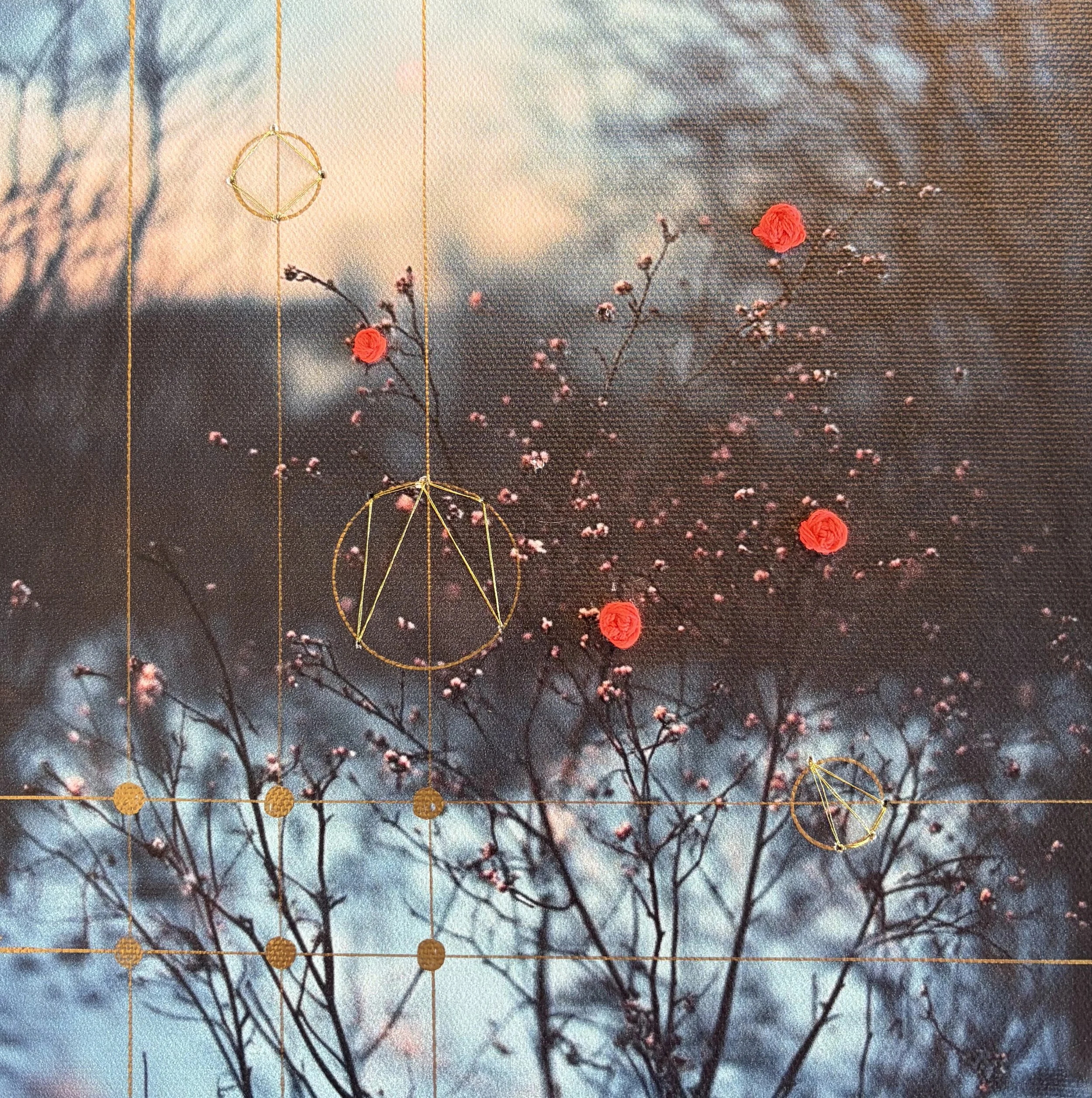
- Hans Christian Andersen, Classic Fairy TalesFairy Tales & Song is an 8X8 mixed media canvas that enters the landscape of complicated grief as described in the DSM 5, where loss lingers beyond expected bounds and the mind continues to circle the absence as if it were still unfolding. The criteria speak of yearning, preoccupation, difficulty accepting the death, emotional numbness that settles in the body, and the sense that life has thinned out or lost its shape. This image captures that experience without naming it outright. It stands in the space between what has ended and what has begun, where memory feels both heavy and strangely sustaining.
The scene opens in the pale aftermath of winter. Bare branches rise from frozen ground, still shaped by the desolation that preceded them. Nothing in the landscape looks fully awake. Yet scattered among the twigs are bright red rose hips, stitched into the image with a deliberate vibrancy that interrupts the quiet. In nature, rose hips hold some of the highest levels of vitamin C found in any fruit and contain antioxidants and anti inflammatory compounds that support healing. They remain long after the petals have fallen, carrying nutrients through the cold months when nearly everything else is lost. Here they stand in for the memories we carry long after someone is gone, the small vital parts that remain even when the world feels emptied out.
A gold grid made from the circle of fifths crosses the scene with careful precision. Each circle contains mirrored chords that reverse direction around an axis note. The usual clockwise movement of fifths turns counter clockwise into fourths, creating harmonically opposite but still related sounds. These reversals echo the emotional motion of grief, where the mind swings between acceptance and disbelief, forward movement and return, trying to find a point of balance between the past and the present. The geometry behaves like a quiet musical system that keeps searching for a resolution it knows may never come.
The branches hold the memory of winter, but they also hold the promise of what survives it. The rose hips suggest that even in a season defined by loss, something nourishing remains. They don’t pretend the cold never happened. Instead they grow because of it, storing what is needed for the next stage. The mirrored chords reinforce this idea. They aren’t tidy resolutions. They are reflections, counterpoints, echoes that coexist with the silence.
“Fairy Tales & Song” becomes a portrait of grief that is about incorporation. The winter hasn’t been undone, but the memories haven’t softened into something easy. Yet, the rose hips insist on life inside the desolation, and the musical grid offers a model of harmony built from opposites. What remains is a quiet understanding that loss becomes part of the story, and the story keeps going.
“The good and the beautiful is not forgotten; it lives in legend and in song.”
- Hans Christian Andersen, Classic Fairy TalesFairy Tales & Song is an 8X8 mixed media canvas that enters the landscape of complicated grief as described in the DSM 5, where loss lingers beyond expected bounds and the mind continues to circle the absence as if it were still unfolding. The criteria speak of yearning, preoccupation, difficulty accepting the death, emotional numbness that settles in the body, and the sense that life has thinned out or lost its shape. This image captures that experience without naming it outright. It stands in the space between what has ended and what has begun, where memory feels both heavy and strangely sustaining.
The scene opens in the pale aftermath of winter. Bare branches rise from frozen ground, still shaped by the desolation that preceded them. Nothing in the landscape looks fully awake. Yet scattered among the twigs are bright red rose hips, stitched into the image with a deliberate vibrancy that interrupts the quiet. In nature, rose hips hold some of the highest levels of vitamin C found in any fruit and contain antioxidants and anti inflammatory compounds that support healing. They remain long after the petals have fallen, carrying nutrients through the cold months when nearly everything else is lost. Here they stand in for the memories we carry long after someone is gone, the small vital parts that remain even when the world feels emptied out.
A gold grid made from the circle of fifths crosses the scene with careful precision. Each circle contains mirrored chords that reverse direction around an axis note. The usual clockwise movement of fifths turns counter clockwise into fourths, creating harmonically opposite but still related sounds. These reversals echo the emotional motion of grief, where the mind swings between acceptance and disbelief, forward movement and return, trying to find a point of balance between the past and the present. The geometry behaves like a quiet musical system that keeps searching for a resolution it knows may never come.
The branches hold the memory of winter, but they also hold the promise of what survives it. The rose hips suggest that even in a season defined by loss, something nourishing remains. They don’t pretend the cold never happened. Instead they grow because of it, storing what is needed for the next stage. The mirrored chords reinforce this idea. They aren’t tidy resolutions. They are reflections, counterpoints, echoes that coexist with the silence.
“Fairy Tales & Song” becomes a portrait of grief that is about incorporation. The winter hasn’t been undone, but the memories haven’t softened into something easy. Yet, the rose hips insist on life inside the desolation, and the musical grid offers a model of harmony built from opposites. What remains is a quiet understanding that loss becomes part of the story, and the story keeps going.