“To be able to forget means sanity.”
- Jack London, The Star Rover
Blue Mnemosyne is an 8x8 canvas shaped by the quieter dimensions of PTSD described in the DSM 5, where memory becomes fractured, distant, or softened by emotional numbing. It reflects the experience of remembering and forgetting at the same time, of holding the past in outlines rather than details.
The scene opens in a blue washed forest, the air thick with mist. Hydrangeas fill the foreground, their blooms luminous and cool. Across cultures, hydrangeas carry meanings tied to memory, apology, and emotional depth. Their color changes based on the soil they absorb, an echo of how trauma alters what we hold onto and what fades. They become a symbol of recollection that shifts, never fixed, always influenced by the environment that shaped it.
A gold grid built from the circle of fifths anchors the composition. Within its circles, mirrored chords attempt to impose clarity, as if the mind is searching for a pattern stable enough to trust. But the fog and the flowers push back, insisting on ambiguity. The result is a tension between precision and dissolution, between what is meant to stay and what slips away for the sake of survival.
Blue Mnemosyne becomes a portrait of memory that no longer behaves cleanly. The hydrangeas bloom with beauty, but their blue tone carries the quiet withdrawal of someone who has lived through too much. The gold geometry reaches for order, yet the forest remains blurred at its edges. What emerges is not erasure, but a softened truth. A past that still exists, just farther away.
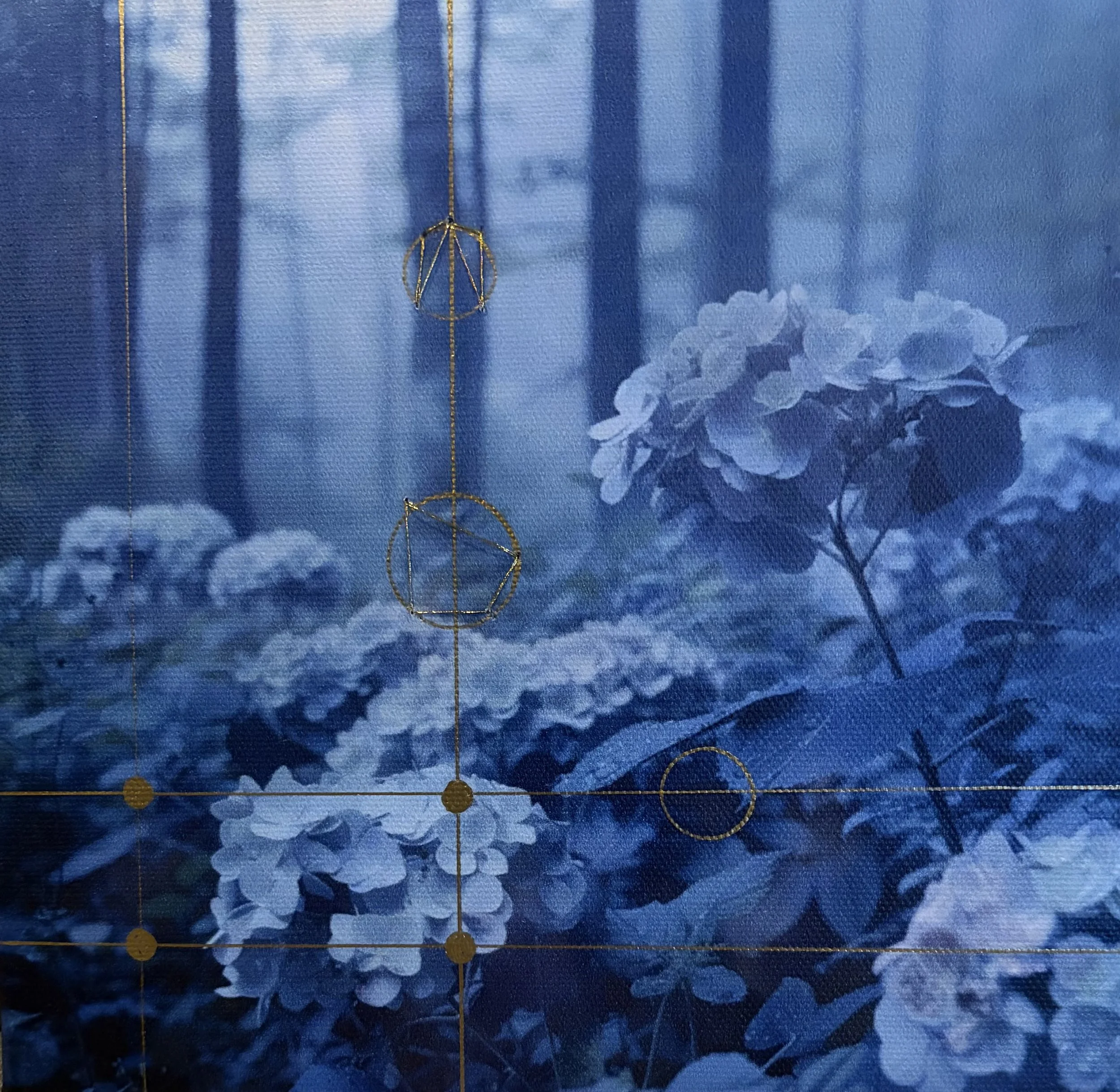 Image 1 of 7
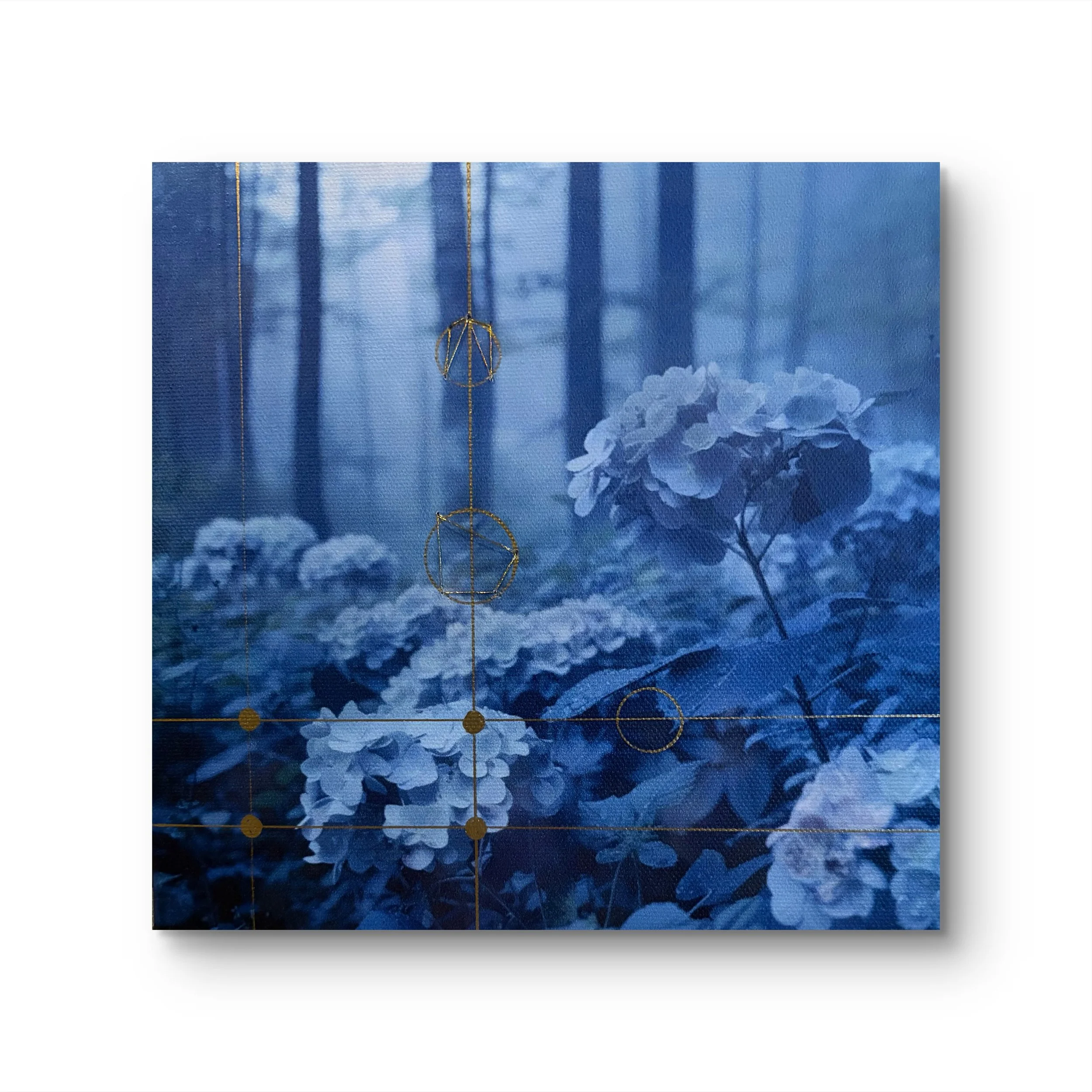 Image 2 of 7
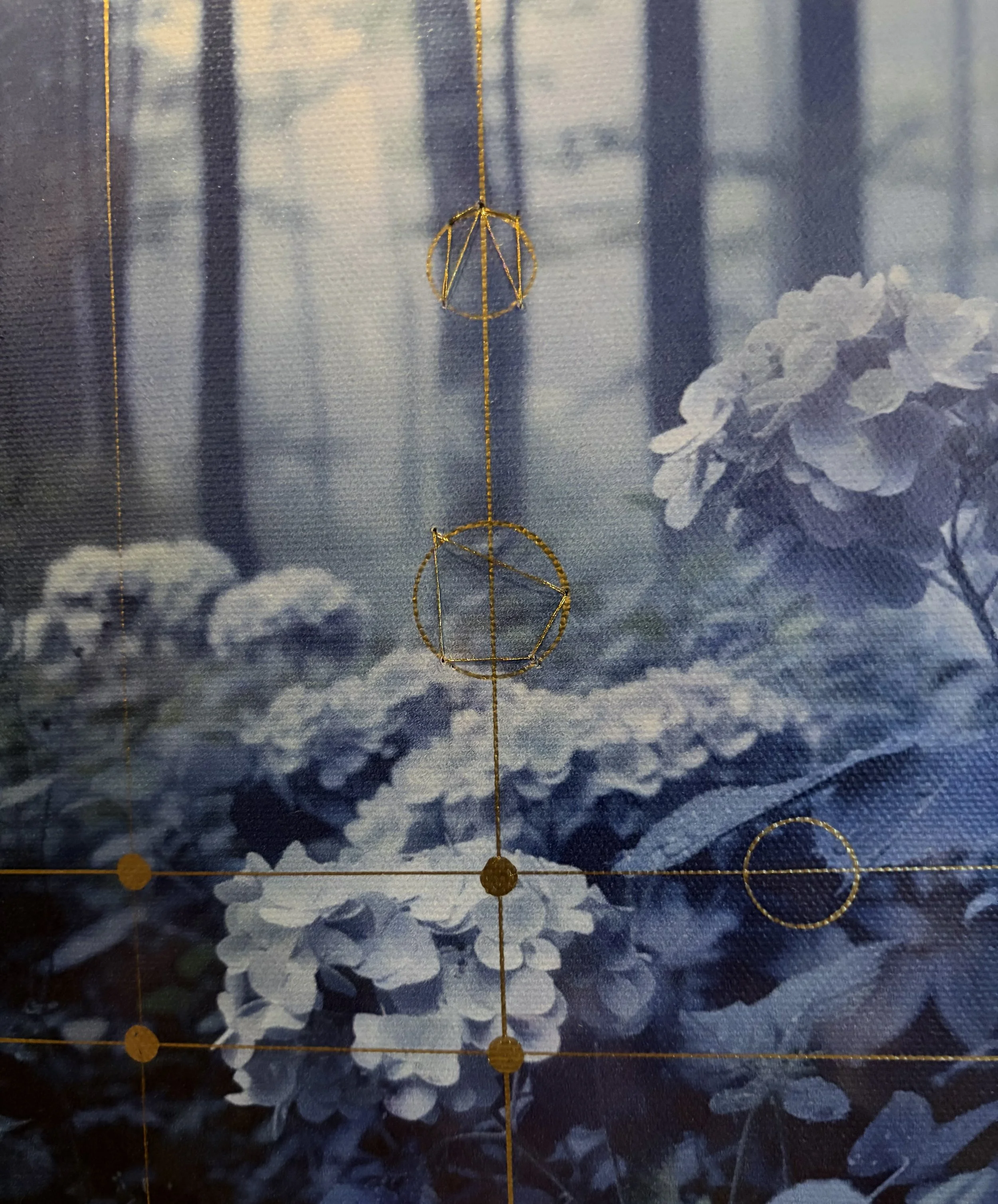 Image 3 of 7
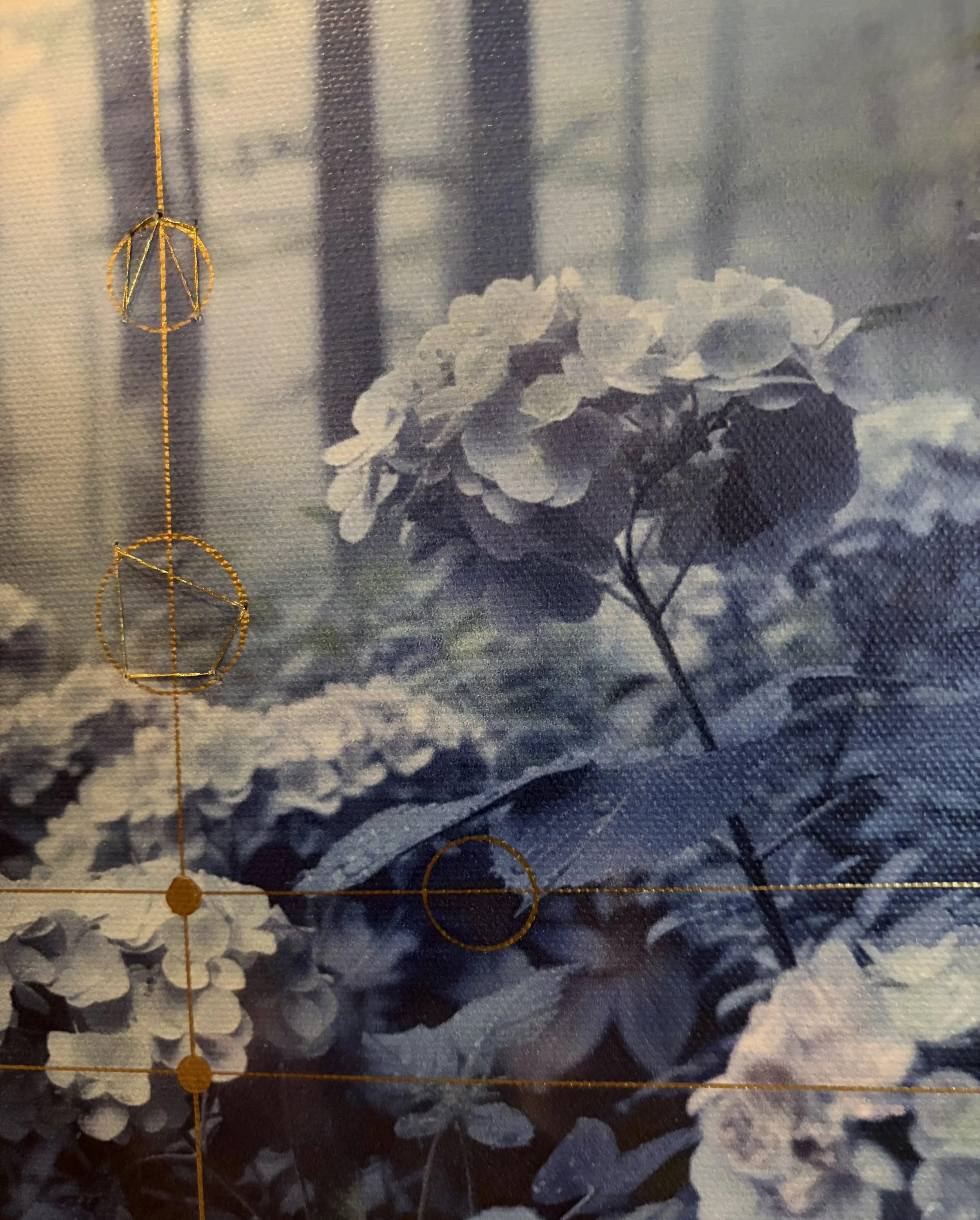 Image 4 of 7
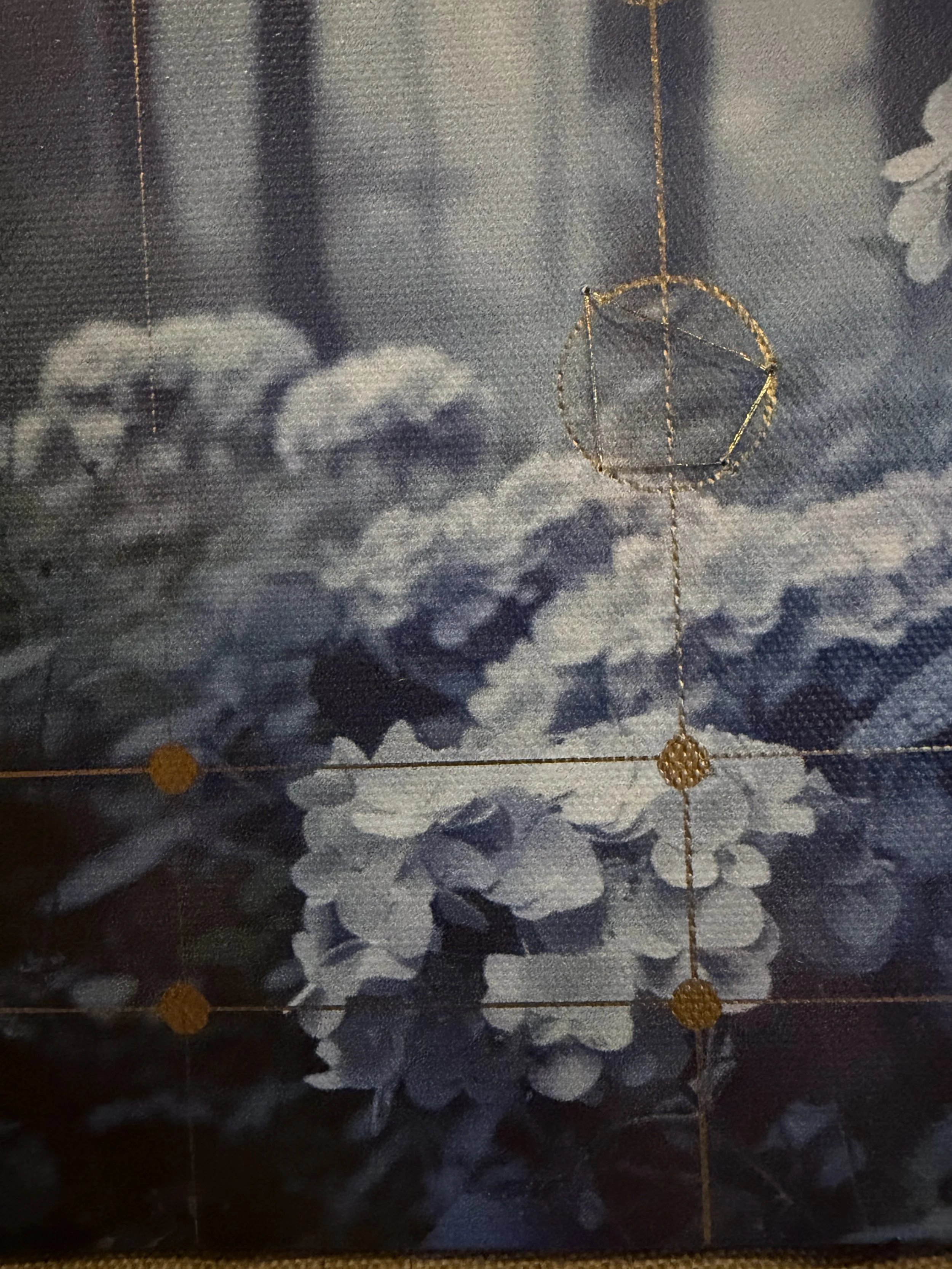 Image 5 of 7
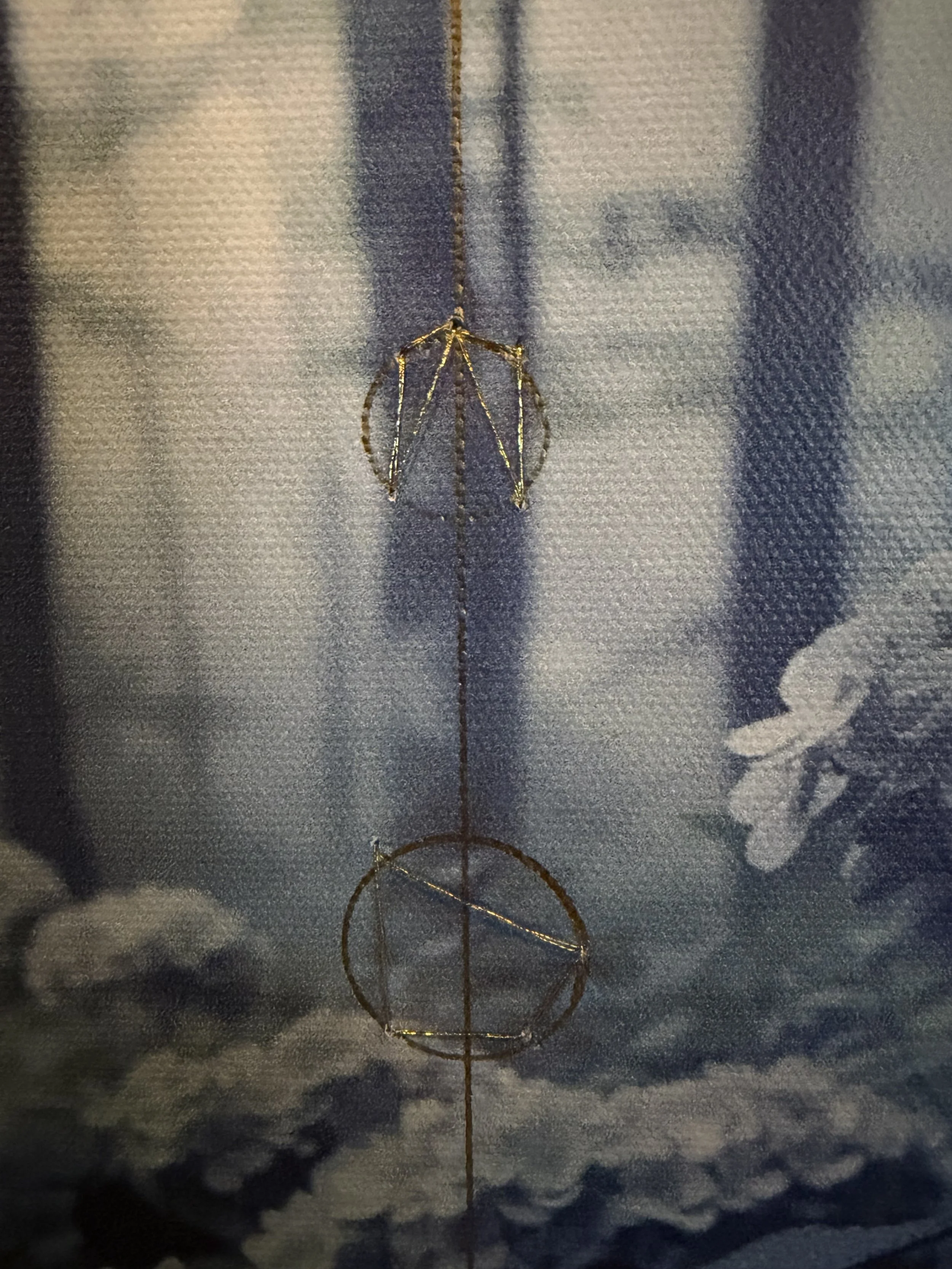 Image 6 of 7
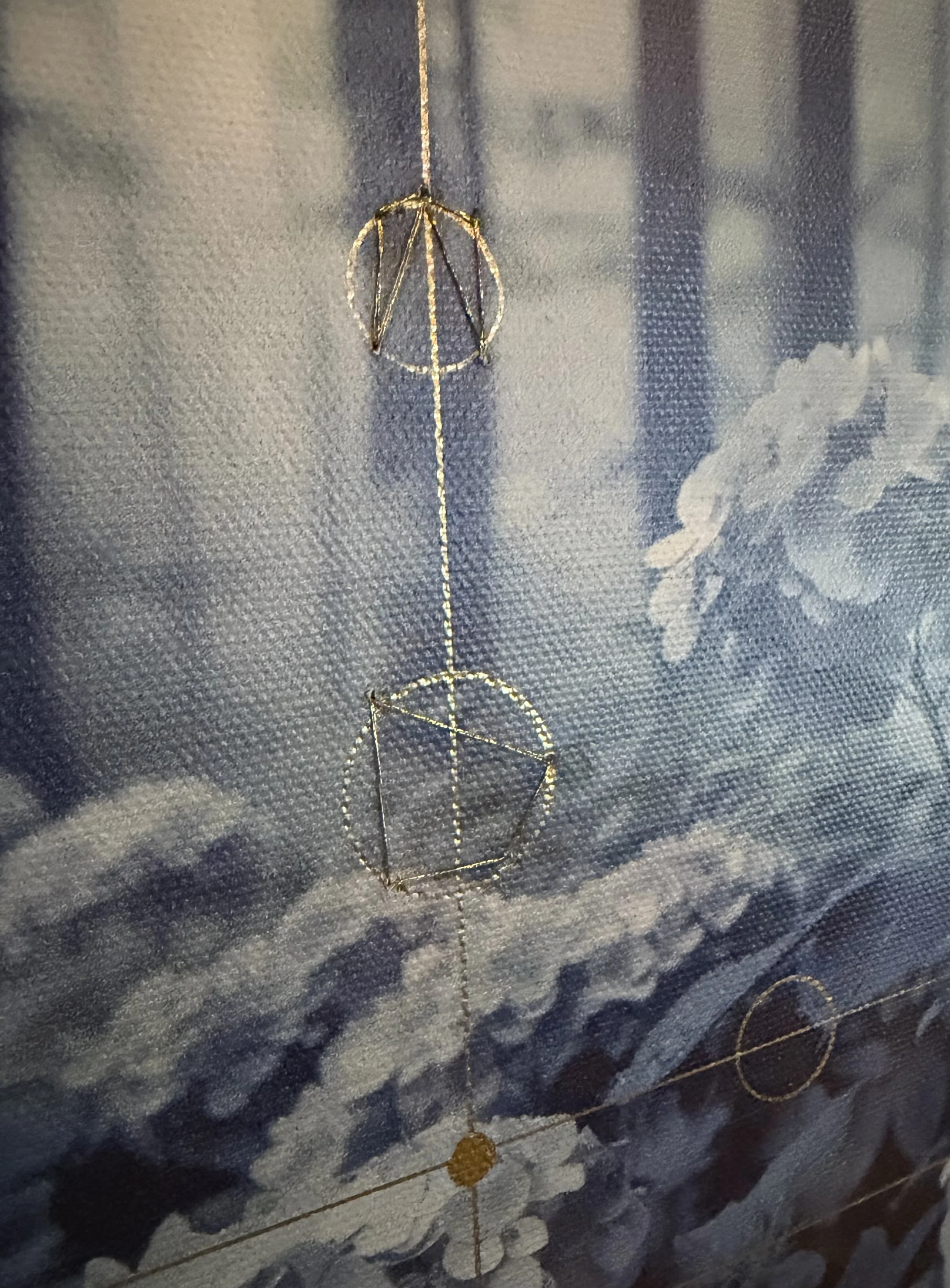 Image 7 of 7